Chinatown, Song Wat and Talat Noi: Bangkok's Most Atmospheric Neighbourhood
This post contains affiliate links. If you book accommodation, tours, or buy products through these links, I may earn a small commission at no extra cost to you. This helps support the site and keeps the content free.
Most people who visit Bangkok’s Chinatown do the same thing. They arrive at dusk on Yaowarat Road, eat their way through a dozen street food stalls, and leave thinking they have seen it. They have not. The real character of this corner of the city lives in the streets behind the main drag: the crumbling shophouses of Talat Noi, the quiet riverside stretch of Song Wat Road, and alleyways that have not changed much since the 1950s.
I live in Bangkok, this is the neighbourhood I take every visitor to, and after years of wandering it I have settled on one walking route that strings the whole thing together. This guide is built around it. If you are still planning the wider trip, start with how many days you need in Bangkok and my guide to getting around the city.
Getting your bearings: three areas, one wander
These three areas sit shoulder to shoulder just south of the old city, and they bleed into each other, so treat them as one long wander rather than three separate stops.
Chinatown (Yaowarat) is the famous one. Yaowarat Road is the main artery, loud and neon-lit and brilliant for street food after dark. Most visitors stop here and go no further.
Song Wat Road runs parallel to the river and has quietly become one of Bangkok’s most interesting streets. Century-old rice merchants and dried goods traders sit next to specialty coffee shops, galleries and vintage stores, and the mix still feels genuinely lived-in rather than gentrified.
Talat Noi is tucked behind the riverfront just south of Chinatown, one of Bangkok’s oldest communities. Chinese shrines wedged between shophouses, family workshops that have run for generations, engine parts stacked on the pavement, street art worked into the walls rather than painted over them. Nothing here has been staged for tourists, which is exactly why it works.
The walk: Wat Mangkon to the river
This is the route I hand to friends, and it works best from mid-morning.
Take the MRT to Wat Mangkon and leave by Exit 1, which drops you straight onto Plaeng Nam Road, a short street packed with local street food that feels a world less touristy than the main drag. Follow it down to where it meets Yaowarat Road and take in the full sensory hit: the gold shops, the huge vertical signage, the smell of duck broth and charcoal.
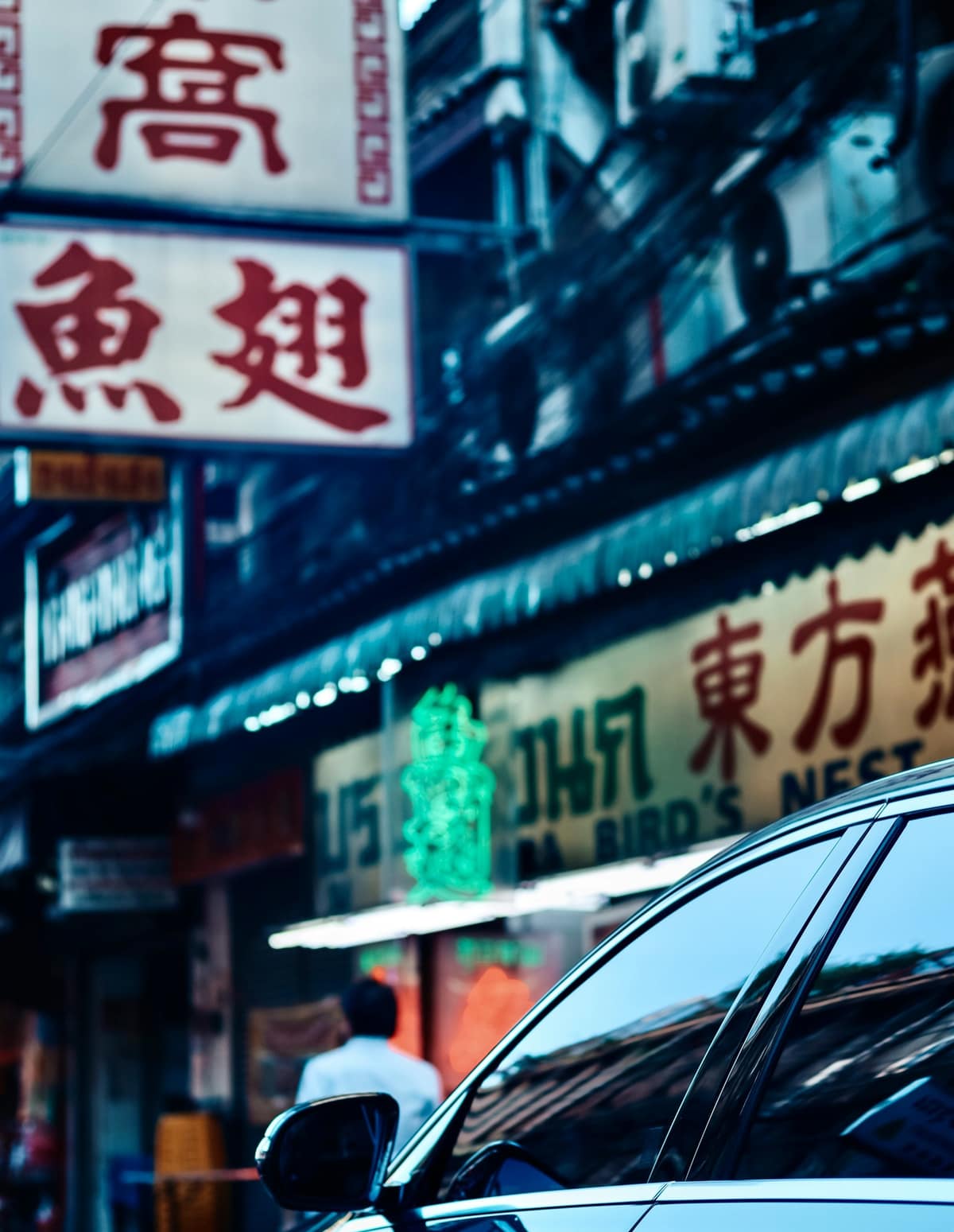
The view from Plaeng Nam Road: signs on signs on signs.
Cross Yaowarat and pick any winding soi heading towards the river. Getting slightly lost here is the point: you will pass shrine doorways, sacks of dried mushrooms, and sois barely wide enough for a motorbike. You will come out somewhere on Song Wat Road, where riverside cafes and vintage-style shops have moved into the old warehouses. Walk it slowly.
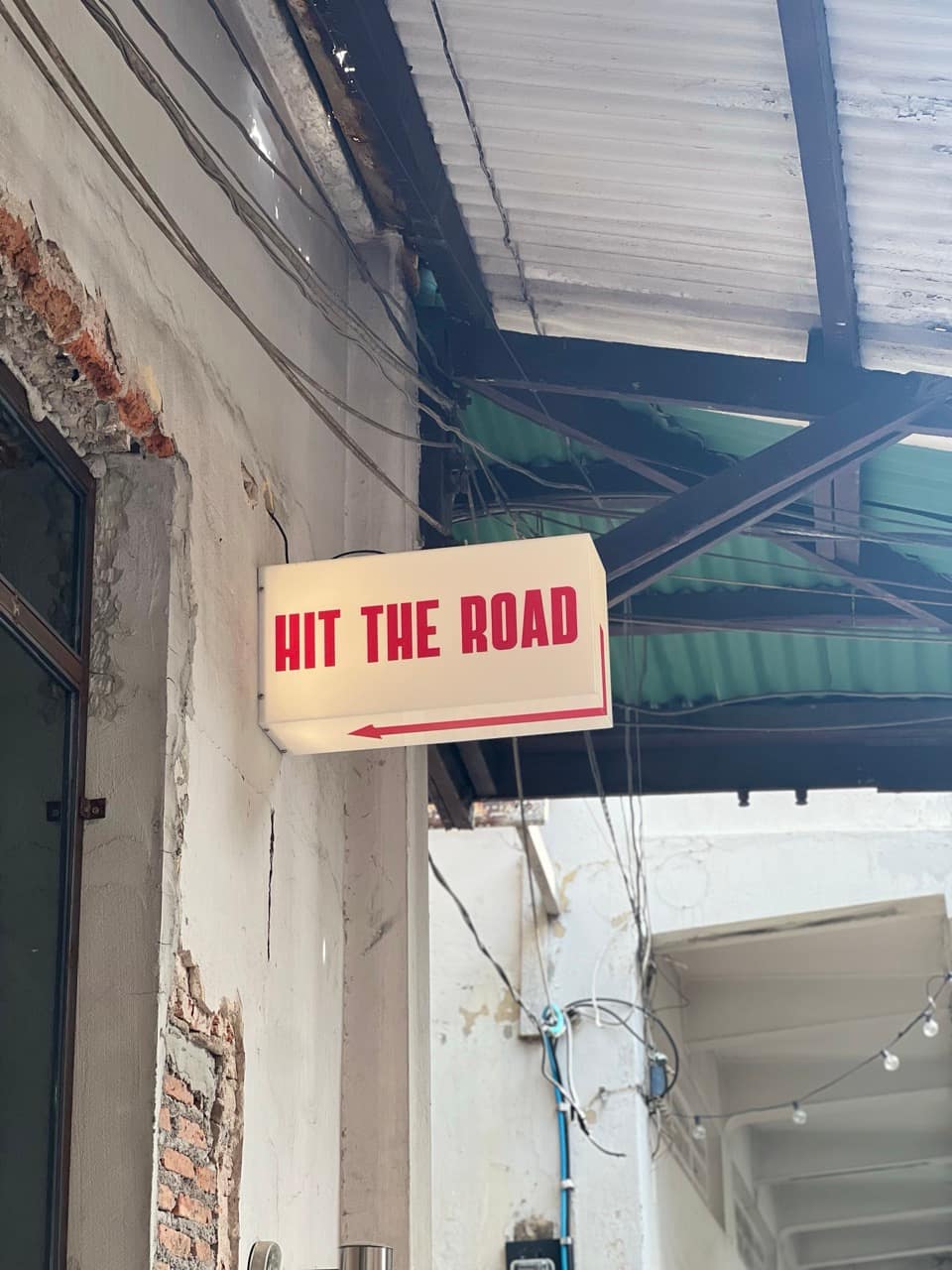
Song Wat’s mix in one sign: old shophouse, new tenant.
From Song Wat, drift south into Talat Noi and let the streets take you where they go. Painted walls, hanging lanterns, spirit houses loaded with offerings, elderly residents on stools outside shophouses their families have held for decades. End at Hong Sieng Kong, a beautifully restored 200-year-old Chinese mansion on the river that now runs as a cafe filled with the owner’s antique collection. It is open 10am to 8pm, closed Mondays, and the riverside tables are the reward for the whole walk.
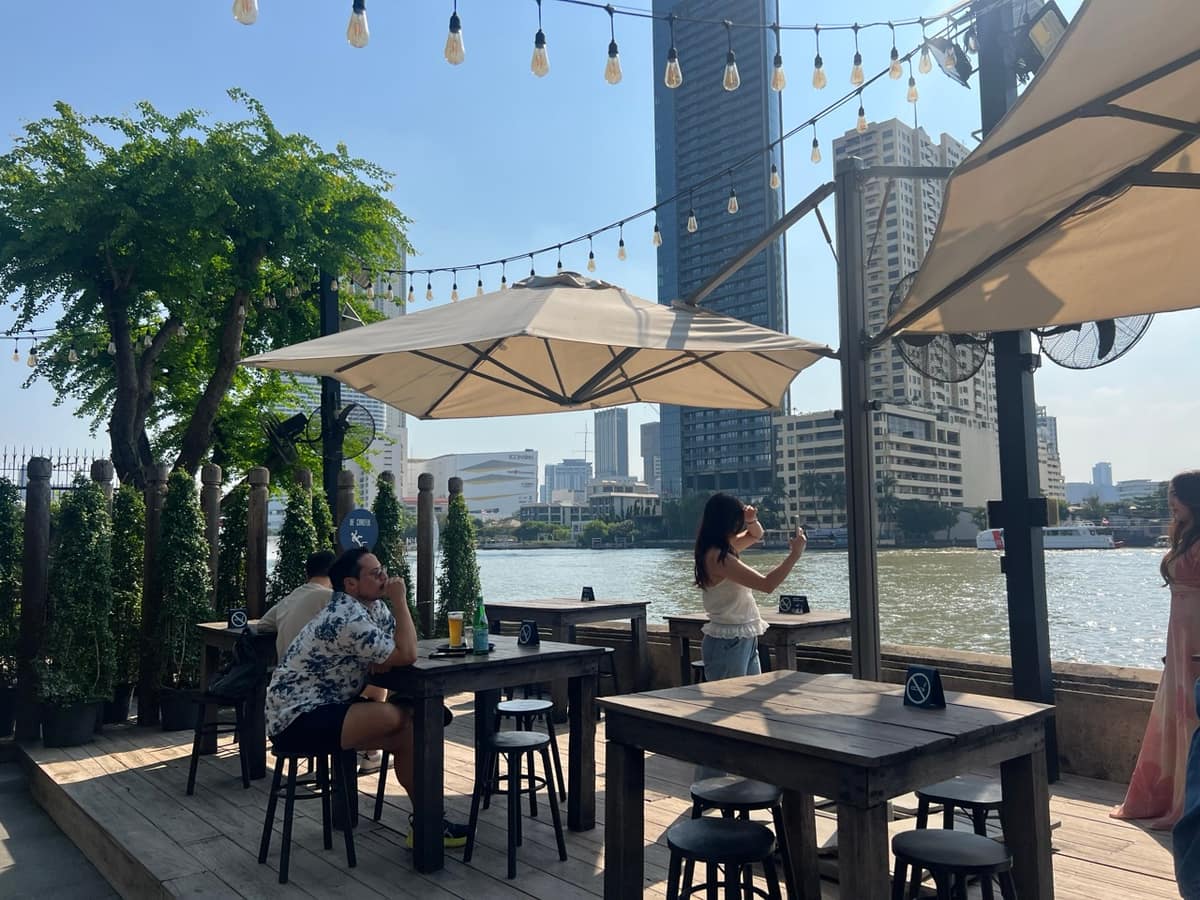
Hong Sieng Kong’s riverside terrace, the finish line I plan the whole walk around.
Getting back is easy. The Marine Department pier is right there: on weekdays the orange flag express boat is a flat 18 baht to anywhere on the river, and since 2026 the yellow flag boat covers daytimes and weekends. Or flag a tuk tuk to Saphan Taksin and connect to the BTS. Either beats sitting in Chinatown traffic.
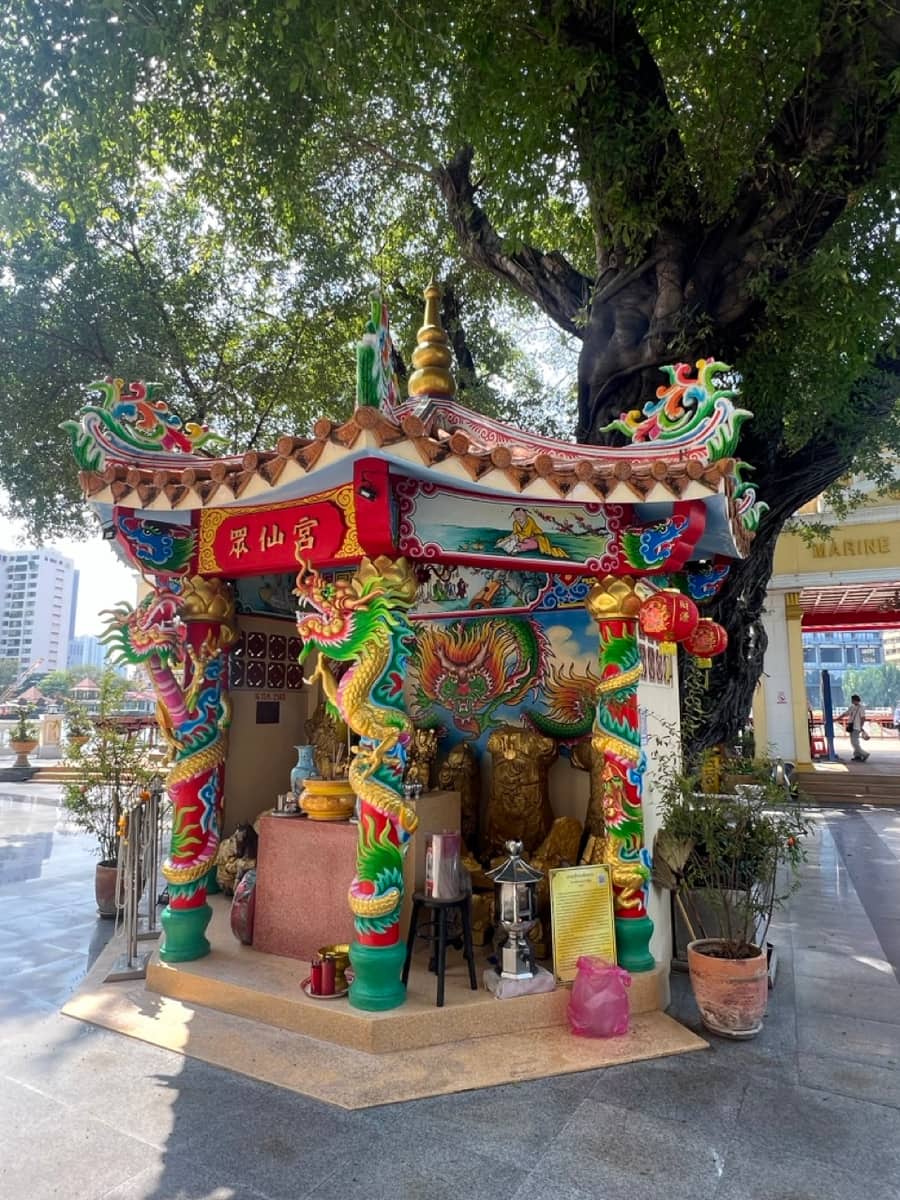
The dragon shrine at Marine Department pier, your cue that the boat home is thirty seconds away.
Where to eat and drink
Urai Han Palo, on Song Wat itself, is the street food pick of the whole neighbourhood: Teochew braised goose from a family shop that has been at it for sixty years and now holds a Michelin Bib Gourmand. A small plate is 250 baht, it is cash only, and it can sell out, so once it is gone, it is gone.
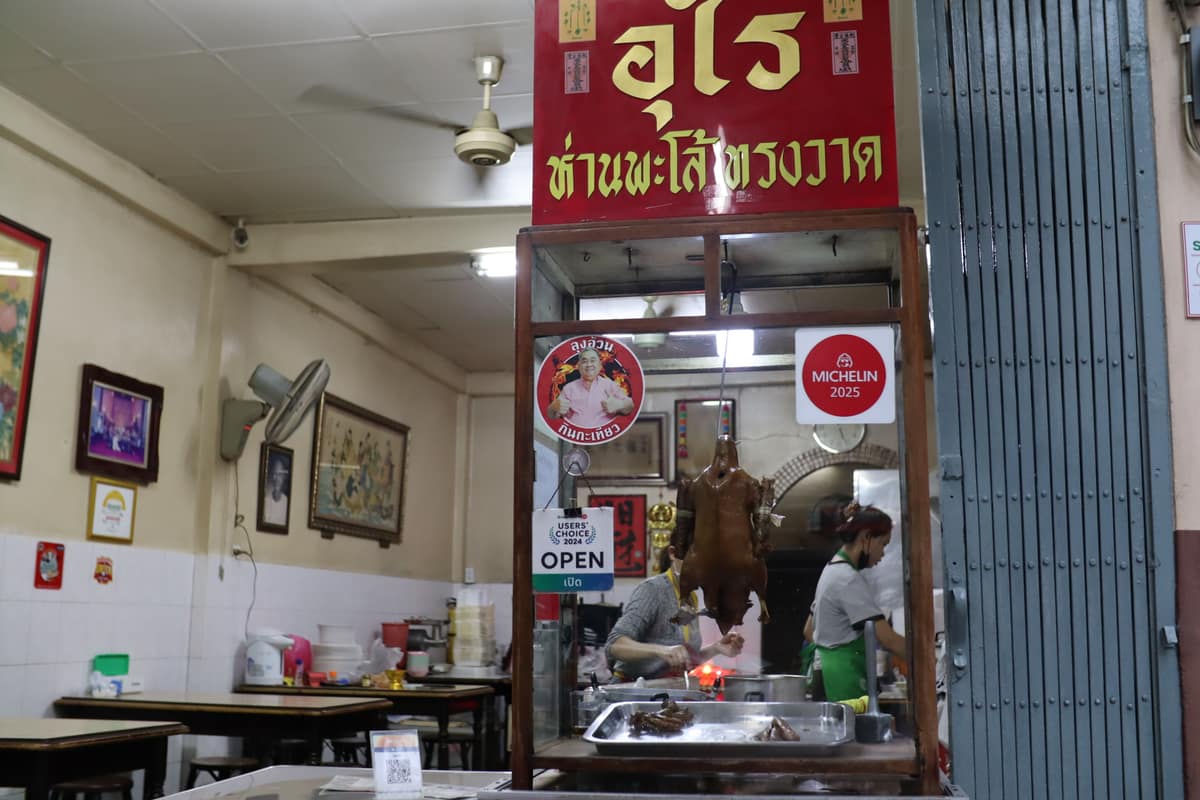
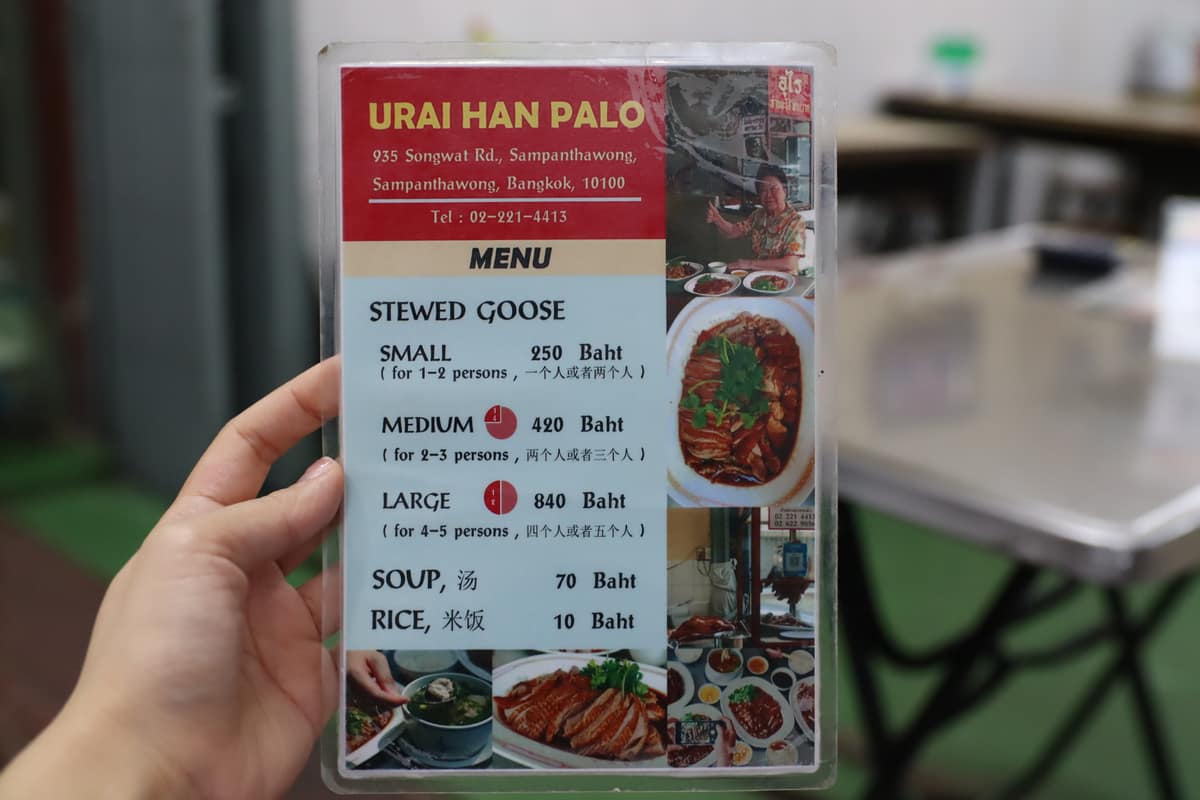
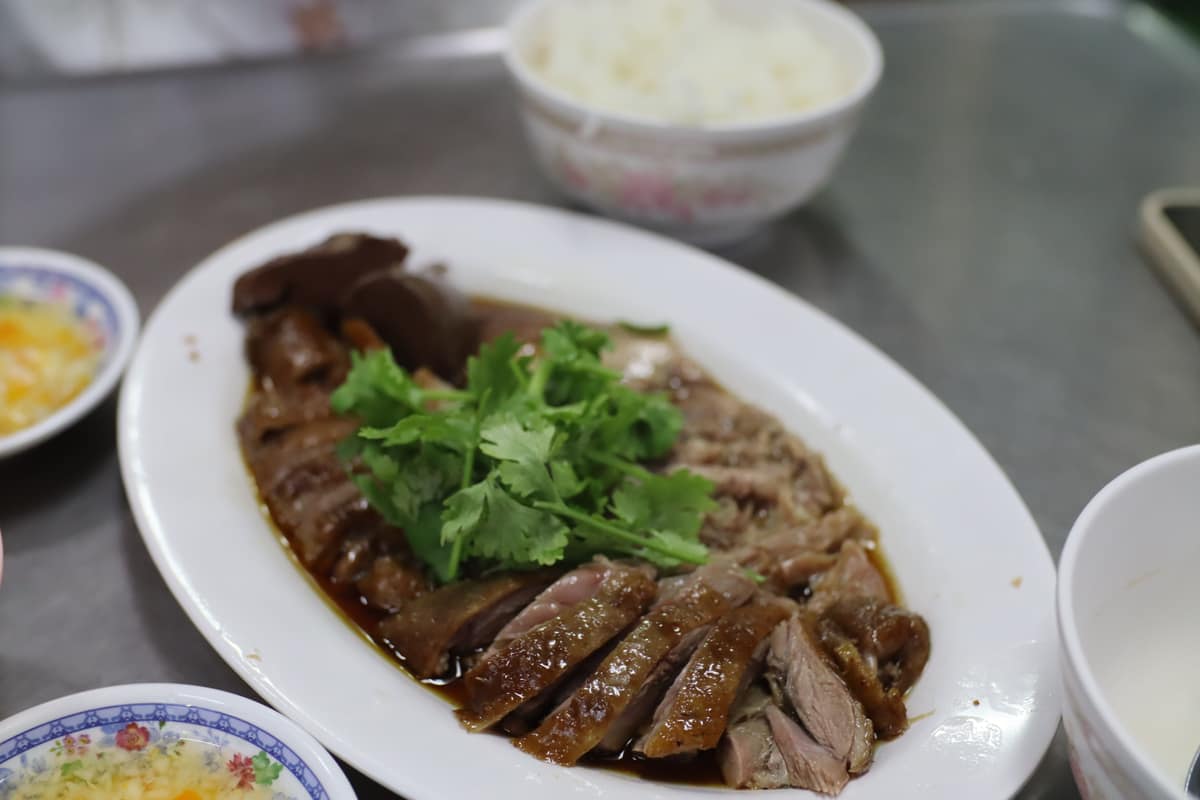
Sixty years of Teochew braised goose on Song Wat, now with a Michelin Bib Gourmand. It can sell out, so once it is gone, it is gone.
For coffee, Song Wat and Talat Noi have quietly become one of the best specialty coffee pockets in the city. Mother Roaster in Talat Noi is the cult favourite, a serious pour-over spot hidden on the second floor above a mechanic’s junkyard, and Local Boys Coffee on Song Wat is the busier, more polished counterpart. Both make good use of the old buildings without over-renovating them, and Hong Sieng Kong covers the riverside end.
Then there is Yaowarat Road at night, which is as good as its reputation and one of the few tourist-facing experiences in Bangkok that genuinely delivers. Arrive after dark when the stalls are out and the neon is on, and graze without a plan: seafood, roast duck, congee, mango sticky rice, fresh sugarcane juice. Go hungry and go slowly, and if you want to know exactly what to order, my Bangkok street food guide covers the dishes worth chasing and how to say them.
Worth adding if you have time
Sampheng Market, just north of Yaowarat, is one of Bangkok’s oldest trading areas and still a working wholesale market: a long, narrow covered lane packed with fabric, accessories and household goods, priced for traders rather than tourists. Worth walking through for the experience even if you buy nothing.
Pak Khlong Talat, the flower market, is a short walk or a five-minute Grab beyond Chinatown’s western edge. It technically never closes, and it is at its best in the very early morning when the wholesale deliveries arrive, but at any hour the marigold garlands and stacked lotus flowers make it feel like nowhere else in the city.
The Ong Ang Canal walkway runs along Chinatown’s northern edge, a regenerated canal promenade lined with street art. On Friday to Sunday evenings a walking street market sets up from around 4pm; on weekdays it is a quiet, pleasant shortcut between Chinatown and the old city rather than a destination in itself.
Day versus night: do both
This neighbourhood genuinely rewards two visits, because the two versions of it are completely different.
Morning and daytime belong to Song Wat and Talat Noi: quiet sois, good light, workshops open, cafes filling up. That is when the walk above shines.
Evening belongs to Yaowarat. The stalls set up, the neon comes on, and the whole stretch becomes one of Bangkok’s most energetic scenes. If you are short on time, do the walk in the morning, escape the afternoon heat somewhere air-conditioned, and come back for dinner.
Should you stay here?
It is not the most obvious base in Bangkok, and that is part of the appeal. You get one of the city’s most characterful neighbourhoods, the river on one side and the MRT on the other, and some genuinely charming boutique hotels in restored shophouses. The trade-off is that you are a train ride from the BTS corridor where most of the city’s modern life happens; my cost of living breakdown covers what that side of town is like. For a first visit I would still base myself near the BTS and come here on foot, but for a second trip, or if atmosphere matters more to you than convenience, staying riverside here is a lovely choice. You can compare hotels in the area on Trip.com.
Is this neighbourhood right for you?
Yes, if you want Bangkok’s history and atmosphere without it being packaged for tourists, enjoy wandering without a fixed itinerary, care about food and coffee, or are on a return visit looking to go deeper. Less so if you need everything walkable from the BTS, prefer the polished modern side of the city, or have one short day and need to prioritise the Grand Palace circuit. For everyone else, it is one of the parts of Bangkok I recommend most.
Chinatown, Song Wat and Talat Noi FAQ
What is the best way to get to Bangkok’s Chinatown?
Take the MRT to Wat Mangkon station, which sits in the middle of Chinatown. Exit 1 puts you straight onto Plaeng Nam Road’s street food. The Chao Phraya express boats also stop nearby at Ratchawong and Marine Department piers.
What is the difference between Yaowarat, Song Wat and Talat Noi?
Yaowarat Road is Chinatown’s loud main artery, famous for night-time street food. Song Wat Road is the quieter riverside street of old trading houses, cafes and vintage shops. Talat Noi is the historic riverside community just south, known for shrines, workshops and street art.
When is the best time to visit Talat Noi and Song Wat Road?
Mid-morning to early afternoon. The light is good, the workshops and cafes are open, and the streets are at their calmest. Save the evening for Yaowarat Road’s street food.
Is Talat Noi free to visit?
Yes. Talat Noi is a lived-in neighbourhood, so there is nothing to book and nothing to pay. Just wander respectfully: people live and work in the buildings you are photographing.
Where should I eat in Bangkok’s Chinatown?
At night, graze the stalls along Yaowarat Road. By day, the standout is Urai Han Palo on Song Wat Road, a Michelin Bib Gourmand shop serving Teochew braised goose, though it can sell out.
Is Chinatown a good area to stay in Bangkok?
It suits travellers who value character over convenience. You get heritage buildings, the river and the MRT, but you are a transfer away from the BTS corridor. First-timers usually do better basing near the BTS and visiting on foot.