What It Costs to Live in Bangkok as a Digital Nomad
This post contains affiliate links. If you book accommodation, tours, or buy products through these links, I may earn a small commission at no extra cost to you. This helps support the site and keeps the content free.
Bangkok is one of the most convenient cities in the world for a digital nomad. Fast WiFi, incredible and cheap food, good transport, year-round sunshine, and modern condos with rooftop pools for a fraction of what you would pay back home. I have lived here for years, so instead of guessing, here is what it actually costs me.
The numbers below are what I actually pay, not a survey average. They should work as a starting point whether you are coming as a nomad, on a longer stay, or just working out whether the move adds up.
The short answer: you can live in Bangkok comfortably on around 80,000 baht a month (roughly $2,300). On a budget, 50,000 baht is doable if you watch your spending and eat like a local. Want a central luxury condo and regular big nights out? 120,000 baht and up disappears easily.
| Expense | Comfortable (per month) |
|---|---|
| Rent (1 to 2-bed condo) | 20,000 to 45,000 THB |
| Electricity | 1,500 to 2,500 THB with aircon |
| Food | around 12,000 THB |
| Transport | low (I ride a scooter) |
| SIM and data | around 500 THB |
| Fun and nightlife | varies a lot |
| Total | around 80,000 THB (~$2,300) |
Bangkok is a love-it-or-hate-it city, and it comes alive once you make friends and learn your way around. If you are weighing up where else to go, my Thailand travel guides cover the islands and trips worth building in.
Rent: the biggest variable
Accommodation is your biggest expense, and it swings massively depending on how central and how new you want to be. Here is what I have actually paid over the years:
- 45,000 THB for a 3-bed in Phrom Phong
- 35,000 THB for a 1-bed in Thonglor
- 30,000 THB for a fancy 2-bed near Rama 4 that felt like a 5-star resort, with an amazing swimming pool and sauna
- 20,000 THB for an older 2-bed in Sathorn, which is where I am now, walkable to loads of street food, bars and restaurants
The pattern is simple. If you want to be right in the centre in a shiny new condo, you are going to pay for it. If you do not mind a building that is a bit older, you can get a really good price. Honestly, the longer I live here the less I desire fancy amenities. I would rather be walkable to great food than have a sky lounge I never use.
For a nomad, I would start your search in Thonglor, Ekkamai or Sathorn. They are mostly walkable and well connected.

Where to find a condo: Facebook Groups are the engine of the Thai rental market, with hundreds of active groups where agents and owners post listings daily. For a more targeted search without trawling through posts, sites like DDproperty work well too.
Most condos here come with a gym and a washing machine, so those are usually not separate line items. If you want more than the building gym, monthly gym passes and Muay Thai classes are both fairly inexpensive.
Electricity: the bill that catches people out
Running aircon, expect roughly 1,500 to 2,500 baht a month. A 1-bed might be nearer 1,000 and a 2-bed closer to 2,000. It comes down to how big the place is and how often you actually run the AC.
The thing worth knowing is that the building matters as much as your habits. Some buildings are simply inefficient, and big older AC units cost noticeably more to run. I lived in an older building with a large built-in under-ceiling unit and the electricity bill climbed to four, five, even six thousand baht a month.
So before you sign anything, ask what the typical monthly electricity bill is for that unit. It is an easy question that nobody thinks to ask, and the answer can be worth a few thousand baht a month.
Food: as cheap or as fancy as you like
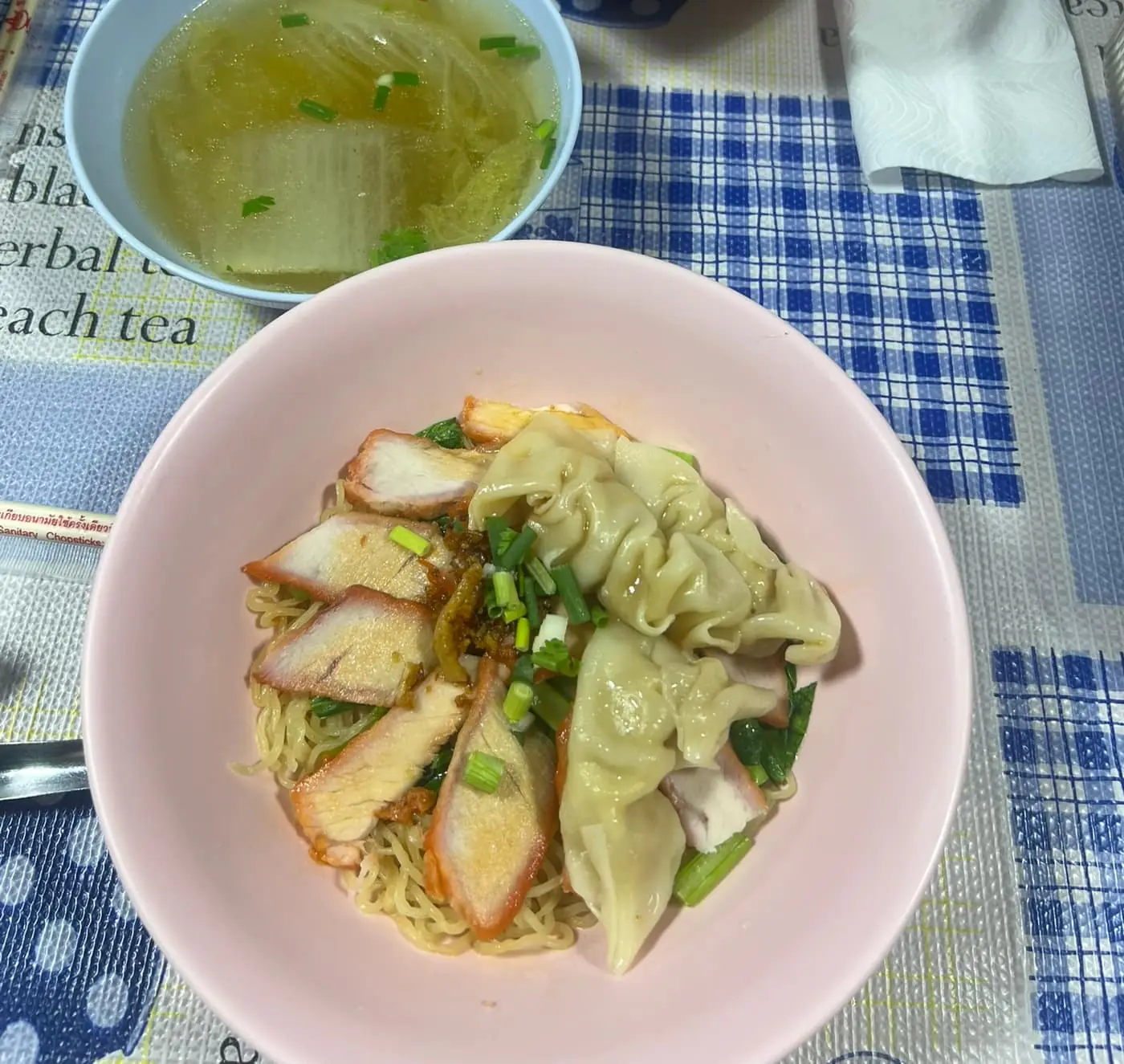
This is where Bangkok really shines. Tasty street food can be as cheap as 60 baht a meal. A Western meal will run you 200 to 400 baht easily.
I rarely cook, because street food is so cheap and so good, but my wife makes amazing Isaan food for very little. If you want to know what to actually order, my Bangkok street food guide covers the dishes worth seeking out. We buy our meat and veg at local markets like Khlong Toei market, where it is a fraction of supermarket prices (supermarkets can be 2 to 3 times more for the same thing).
Realistically, budget around 400 baht a day to eat well with one Western meal in there, and a bit more at weekends when you go out to restaurants. If you really wanted to, you could survive on 200 baht a day for food and drinks by eating local.
Transport: cheaper than you think
Bangkok’s public transport is efficient and well connected, with the BTS Skytrain, the MRT underground, buses, and even river boats. Taxis and Grab are reasonably priced too (always ask for the meter in a normal taxi). I have written up the whole system, fares included, in my guide to getting around Bangkok.
These days I ride a scooter, which pays for itself in Grab savings alone. I drive most of the time, so my monthly transport cost is low. If you stick to Grab and the trains you will still spend far less than you would getting around most Western cities.
SIM and data
Grab a tourist SIM from True or AIS when you land. It starts around 500 baht, then you can move to a cheaper plan through their apps once you are set up. Data here is fast and cheap.
Working: I work from home
There are plenty of coworking spaces in Bangkok, but I never use them. I work from home for maximum productivity, and most decent condos have their own common areas or coworking floors anyway.
When I do go out, it is to enjoy myself or to think, not to grind, and Bangkok has some incredible cafes for exactly that. I have written up the 50 best cafes in Bangkok with the ones worth working from marked, and I keep the same list as a map you can open on your phone.
Nightlife: where the budget can blow out
This is the one that catches people out. Bangkok nightlife can be cheap or eye-watering depending on where you go and how much you drink. Drinks in bars are not cheap, easily 200 to 400 baht each, so a regular wild one adds up fast.
That said, the locals know how to enjoy themselves, and there are endless bars, clubs, community spaces and night markets where you can have a few drinks (or none) and meet people. Take it easy and nightlife barely dents your budget. Don’t, and it can quickly become your biggest line item.
So, what is the real monthly total?
- Budget: around 50,000 THB. Doable if you watch your spending, live in an older condo and eat local. In practice that means taking a building a few years older rather than a new one, eating mostly Thai food at around 200 baht a day, using the BTS and Grab rather than owning a scooter, and treating big nights out as occasional rather than weekly.
- Comfortable: 80,000 THB and up. Achievable for most nomads.
- Very comfortable: 120,000 THB and up. A central new condo and a good social life.
You could go lower than 50k if you live like a local and skip the Western food entirely. The beauty of Bangkok is that it scales to whatever you want it to be.
What those totals do not include
The figures above are a monthly run rate for living here. A few things sit outside that and are worth budgeting for separately, because they arrive annually or as one-offs rather than every month:
- Visas and extensions. The standard fee for most visas and extensions is 1,900 baht. Most tourist visas are free on arrival and then 1,900 baht to extend, and my marriage visa costs the same 1,900 baht now, so for a lot of people this is not a big line. It does depend entirely on what you need. I previously held a Thailand Elite visa, which was at the expensive end but let me stay for five years without thinking about it, and plenty of people I know are now going for the DTV instead. Visa rules change often and the right one depends on your situation, so I am not going to tell you which to get: check the current rules and work out what fits. My visa requirements guide covers the basics for UK passport holders.
- Travel or health insurance. Rates depend on your age, your cover and whether you are here short or long term.
- Flights home, and the deposit on a condo, which is usually paid up front.
Living in Bangkok FAQ
Is Bangkok expensive to live in?
Not compared to most Western cities. A comfortable month costs around 80,000 baht, roughly $2,300, and that includes a decent condo, eating out most days and a social life. The same standard of living in London, Sydney or New York would cost several times that. Bangkok is expensive only relative to the rest of Thailand.
How much do you need per month to live in Bangkok?
Three realistic tiers: around 50,000 baht if you are careful, 80,000 baht for comfortable, and 120,000 baht and up for a central new condo and a busy social life. The gap between them is almost entirely rent and nightlife, which are the two lines that move most.
How much is rent in Bangkok?
From my own leases over the years: 20,000 baht for an older 2-bed in Sathorn, 30,000 for a 2-bed near Rama 4 with a pool and sauna, 35,000 for a 1-bed in Thonglor, and 45,000 for a 3-bed in Phrom Phong. Age of the building moves the price more than location does.
Can you live in Bangkok on 50,000 baht a month?
Yes, and comfortably. It means an older condo rather than a new one, eating mostly Thai at around 200 baht a day, using the BTS and Grab instead of running a scooter, and keeping big nights out occasional. You are not scraping by at that level, you are just not paying for a sky lounge.
How much is electricity in Bangkok?
Around 1,500 to 2,500 baht a month if you run aircon, nearer 1,000 for a 1-bed and about 2,000 for a 2-bed. Older buildings and big built-in AC units can push it far higher: in one older place of mine it reached four to six thousand a month. Ask what the unit’s typical bill is before you sign.
How much does food cost in Bangkok?
Street food starts around 60 baht a meal and a Western meal runs 200 to 400 baht. Budget about 400 baht a day to eat well with one Western meal in there. Eating local only, 200 baht a day is realistic. Buying meat and veg at a local market like Khlong Toei rather than a supermarket makes a genuine difference, since supermarkets can be two to three times the price for the same thing.
Which area of Bangkok should you live in?
For a nomad I would start in Thonglor, Ekkamai or Sathorn. All three are walkable and well connected. I am in Sathorn now, mostly because being able to walk to street food, bars and restaurants matters more to me than the building being new.
Is Bangkok good for digital nomads?
It is one of the best-set-up cities in the world for it: fast internet, cheap and excellent food, transport that works, and a large community already here. The main thing to plan around is your visa, since that is what dictates how long you can stay rather than what you can afford.
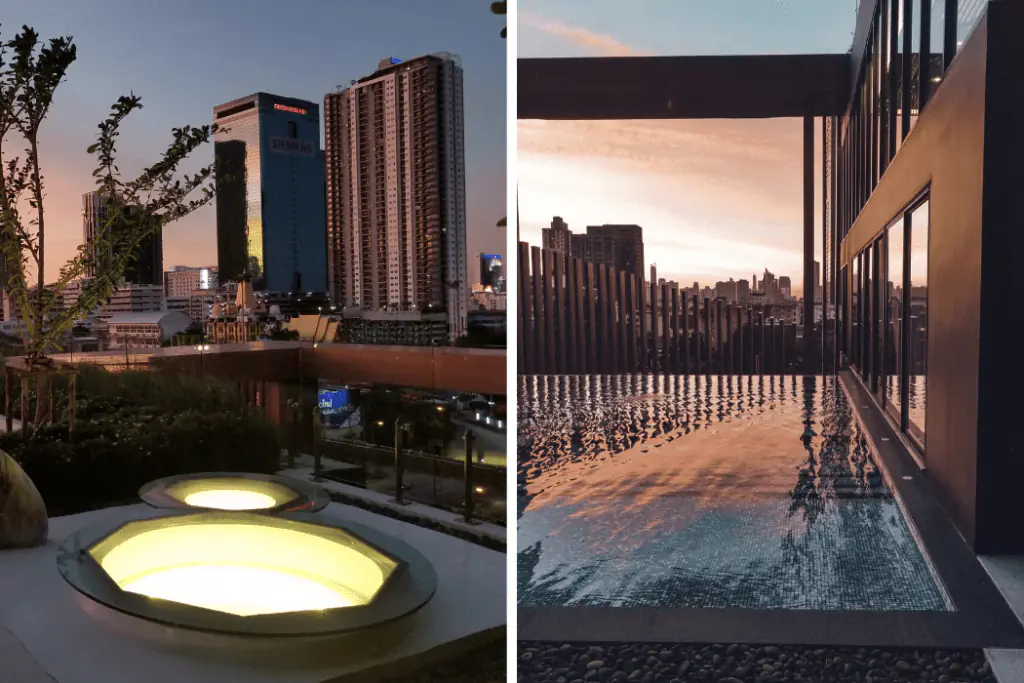
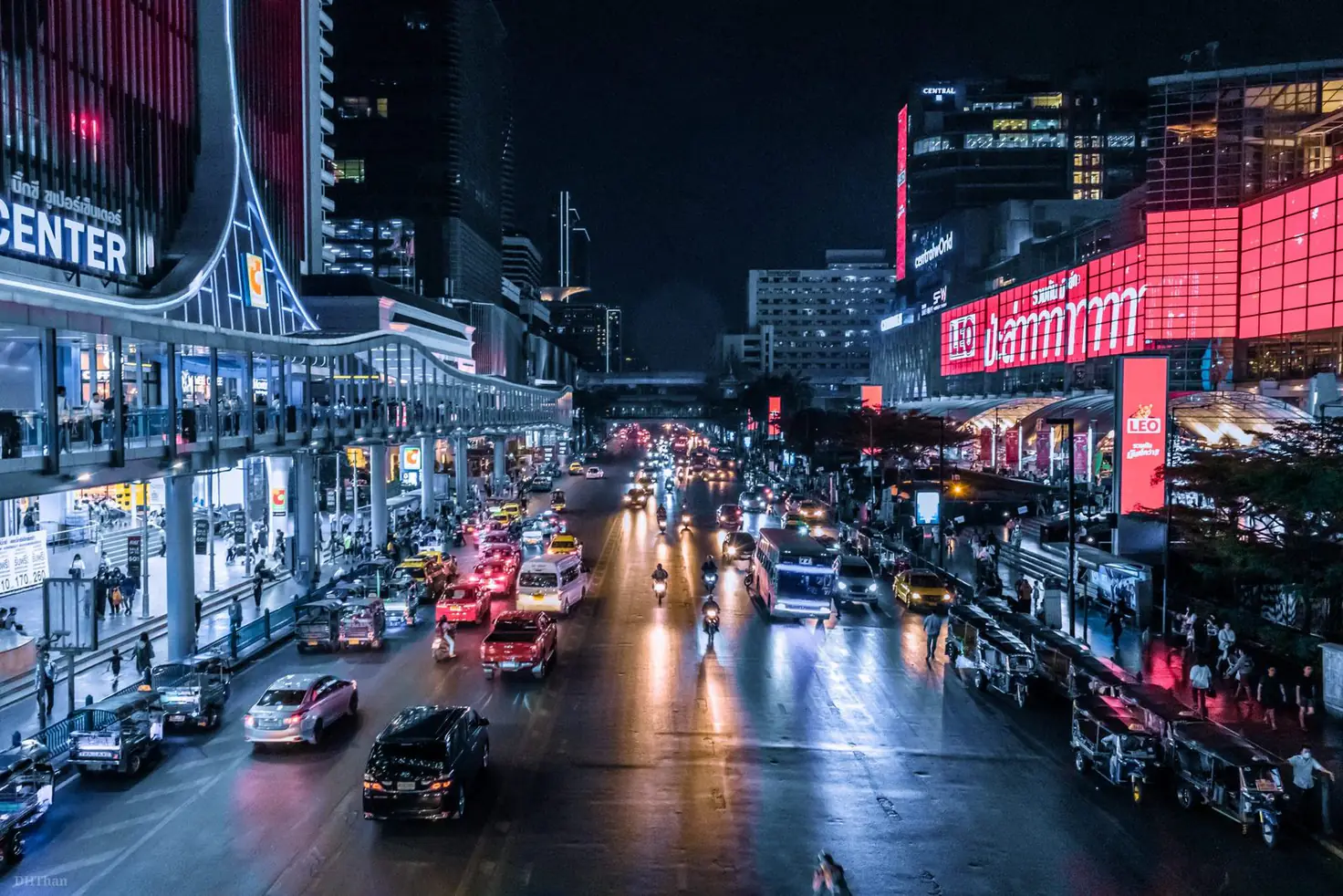
I love cities, and I spend most of my year living in them instead of lounging on a beach somewhere. I would take the lights of a cityscape outside my window over watching the waves before I sleep. I want to feel like I am somewhere where something is happening 24/7, where I don’t have to worry about WiFi and I can meet interesting people any day of the week. The longer I travel, the more I gravitate towards making friends and the convenience that city life brings. If you are weighing up where to base yourself next, I have rounded up the digital nomad hubs I rate most by region.
If a city break is not your thing, our Koh Chang travel guide is our go-to weekend escape.