Getting Around Cebu: A Transport Guide and Where to Go
This post contains affiliate links. If you book accommodation, tours, or buy products through these links, I may earn a small commission at no extra cost to you. This helps support the site and keeps the content free.
I had a brilliant time exploring Cebu, in the Central Visayas region of the Philippines, which is made up of the main island itself plus 167 surrounding islands and islets.
Climate: Hot & humid
Regional language: Cebuano
Local food: BBQ, lechon (roasted pig), rice, noodles, mangoes
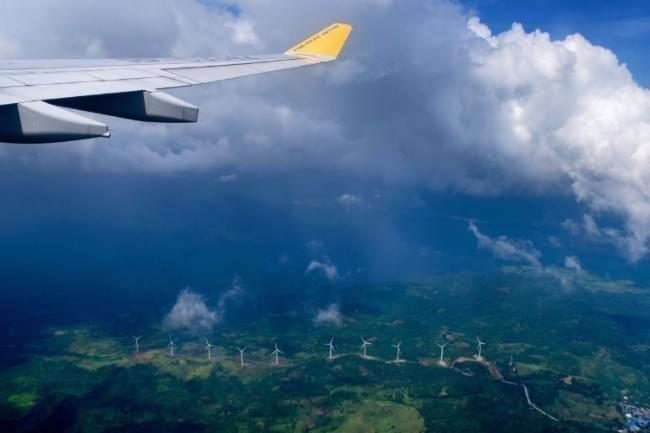
We arrived in Cebu after our first experience on budget airline, Cebu Pacific Air. It was a modest flight but we got some amazing views of the Philippines from above.
Before you fly, it is worth checking the British visa requirements for Southeast Asia, as Brits get 30 days in the Philippines visa-free. For more of the region, browse our other travel guides.
Here are a few useful tips on getting around Cebu and how to get to Malapascua Island, along with another “funtastic” excursion idea!
Getting Around Cebu
Public transport in the Philippines can feel chaotic at first, but that is half the fun. Here is how to get around Cebu, from the apps that make city life easy to the local rides worth trying at least once.
The short version: in Cebu City, Grab is the easiest way to get door to door, MyBus and the modern Beep buses cover the main routes cheaply, and jeepneys are the dirt-cheap local experience. For longer trips up or down the island you want the Ceres buses from the North and South terminals, and boats link Cebu to the surrounding islands.
Grab and taxis
Ride-hailing has changed a lot since I first wrote this. Uber pulled out of the Philippines back in 2018 after selling its Southeast Asia business to Grab, so do not bother looking for it. Grab is now the app everyone uses, booking either a private car or a metered taxi with the fare agreed up front, which saves a lot of haggling. It is cashless (GCash, Maya or card) and the most stress-free way to get around the city. Metered street taxis still work fine too, just ask the driver to switch the meter on.
MyBus and Beep (the city buses)
The easiest public option in the city is MyBus, an air-conditioned bus network linking key spots like SM City, SM Seaside, IT Park and the airport. Fares run roughly P25 to P50 depending on distance, paid with a reloadable MyBus card from the terminals. You will also come across Beep, sleek modern mini-buses on fixed routes with cashless tap cards. Both are a comfortable, cheap step up from a jeepney when the route suits you.
Jeepneys
The jeepneys are still the real local experience, and they are about as cheap as it gets, with fares starting around P13 for short city trips. Routes are marked with a code of letters and numbers on the front, so check that before you hop on. Newer air-conditioned “modern jeepneys” are appearing too, using the same tap cards. Jeepneys are like rare Pokémon, you have to be skilled to catch one. My theory is to jump onto the back with some loose change in your hand and shout where you are heading!
Tricycles and habal-habal
Off the main roads, in towns and residential areas, tricycles (motorbikes with a sidecar) handle short hops for around P20 to P40. For uphill or last-mile trips you will also find habal-habal, informal motorbike taxis where you ride pillion, plus app versions like Angkas and JoyRide. Fares for the informal ones are negotiable, usually P50 to P150 depending on distance, so agree the price before you set off.
Buses and boats for the rest of the island
For longer journeys up or down the island, Ceres run the yellow long-distance coaches from Cebu City’s North and South bus terminals, with smaller vans and minibuses covering the same routes. To reach the surrounding islands you will use a mix of fast ferries for the bigger crossings like Bohol, and pump boats, the wooden outriggers that hop between the smaller islands.
Getting from Mactan-Cebu airport to the city
Landing at Mactan-Cebu International Airport, you have three easy options. Grab is the simplest, around P500 and up depending on where you are staying. MyBus runs from the airport to SM City and on towards the city for about P50, taking roughly 50 minutes. Or take one of the official airport taxis from the rank outside.
Getting to Malapascua Island
Malapascua is a small island (you can walk around it in just 1-2 hours) at the northernmost tip of Cebu. It is best known for world-class diving as it’s the only place in the world where you can dive with thresher sharks all year round.
To get to Malapascua, I caught a bus from Cebu City’s North Bus Terminal up to Maya, the little port at the top of the island. It is a long ride, roughly four hours, but cheap, expect to pay somewhere around P220 to P300 for the Ceres coach depending on whether you go air-con or not. Ceres buses leave every half hour or so, so you do not need to plan around a timetable.
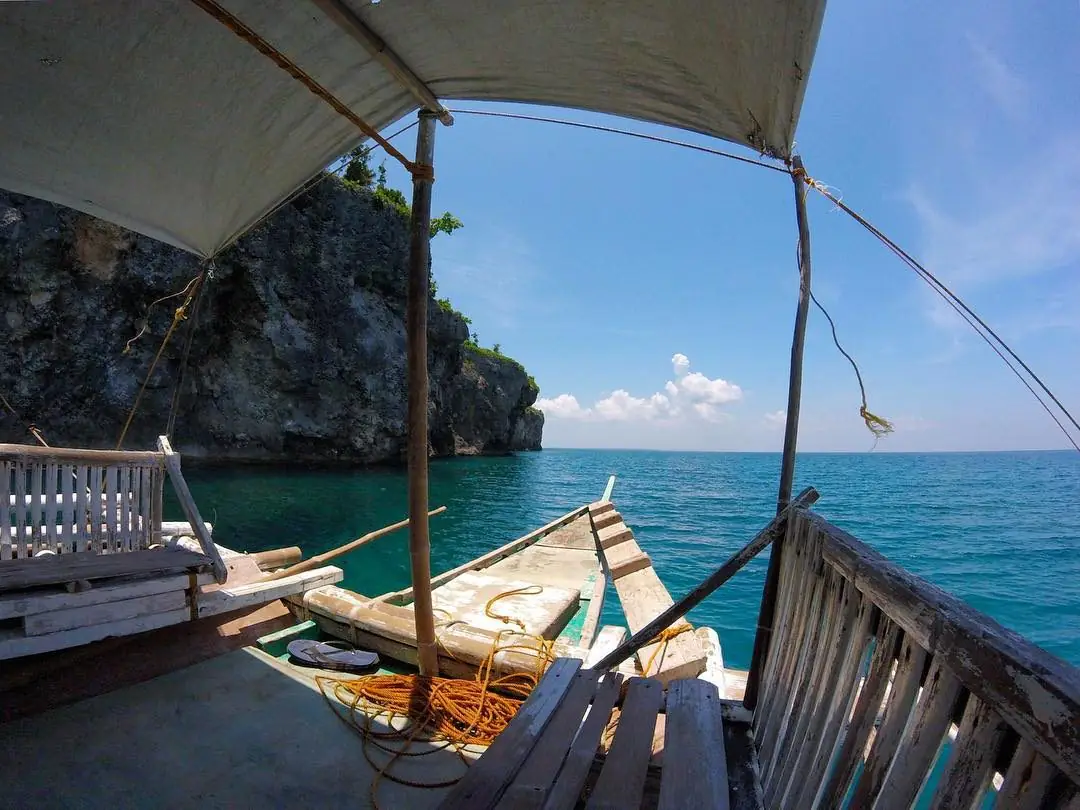
From Maya, I haggled my way onto a public pump boat across to Malapascua. Reckon on roughly P100 to P200 for the crossing, with the higher end more likely on quiet days when there are fewer passengers to share the boat, plus a small environmental fee (around P75 when I last checked) collected at the tourism office. Treat all of these as rough guides rather than fixed prices, fares creep up over time and shift with fuel costs. The journey itself was breathtaking. Open water, island views, cool air and the soles of leaping flying fish!
I would recommend staying a night or two in Malapascua or the surrounding areas. There is so much to do and see, as well as giving you the opportunity to visit one of the nearby islands. If you enjoy these quieter island escapes, our two nights in Phu Quoc follows a similar low-key pace over in Vietnam.
Gibitngil “Funtastic” Island
Gibitngil, aptly named “Funtastic” by the locals is an even smaller island, nearby Malapascua. A worthwhile visit if you are staying in either Daanbantayan or Medellin.
You can hire a cottage for the day for a modest fee (a couple of hundred pesos when I went, though expect prices to have nudged up since). You can cliff-to-rock zipline, kayak, snorkel, and my favourite, a 40-foot cliff diving platform (sorry Mum)!
On that note, between the cliff jumping, the ziplining and the diving up at Malapascua, Cebu is one of those trips where it is worth reading your insurance rather than assuming. Adventure activities and scuba are the two things standard policies most often exclude or cap. SafetyWing is the cover I travel on.
Where Else to Go in Cebu
I spent most of my time up north, but Cebu is a big island with a lot more going on. If you have longer, here are the spots I would point you towards:
-
Oslob is famous for swimming with whale sharks, and it is worth being honest about it: the sharks are hand-fed to keep them in one place for tourists, which disrupts their natural behaviour. I would think twice before going, and if seeing whale sharks really matters to you, look into Donsol over in Sorsogon instead, where sightings are wild and seasonal rather than baited.
-
Moalboal, down on the south-west coast, is brilliant for snorkellers and divers thanks to the sardine run, a huge shimmering shoal you can swim with just off the shore. It is also the jumping-off point for Kawasan Falls, a series of turquoise waterfalls inland where you can canyoneer your way down through the pools.
-
Bantayan Island, off the north-west tip, is the one to pick if you just want soft white sand and a slow pace. It is far more laid-back than the busier resort spots and easy to reach by bus and ferry.
-
Bohol makes a great day trip or overnighter. A fast ferry from Cebu City gets you there in a couple of hours, and you can pack in the Chocolate Hills and the tiny wide-eyed tarsiers in one go.
I had a fantastic time in Cebu and I would recommend going to all of you. Just bear in mind, it is a difficult island to navigate! I found myself getting stressed out when things didn’t go to plan. My advice to you (or myself) is to not be too hard on yourself when they do.