Best Parks in Bangkok: The Famous Ones and the Hidden Gems Worth Finding
This post contains affiliate links. If you book accommodation, tours, or buy products through these links, I may earn a small commission at no extra cost to you. This helps support the site and keeps the content free.
Bangkok does not get much credit as a green city, and after an afternoon walking the traffic and concrete of Sukhumvit you would understand why. But the parks are here, and they are far better than most visitors realise. I live in the city and cycle them most weeks, and some of my favourite mornings are spent in green spaces where hundreds of locals are doing tai chi, playing badminton, or taking government-subsidised sailing lessons, with barely a tourist in sight.
This guide covers both sides: the famous parks worth knowing about, and the ones that stay off the tourist trail. However you plan to reach them, my guide to getting around Bangkok covers the trains, boats and bikes that get you there.
The well-known parks
Lumpini Park
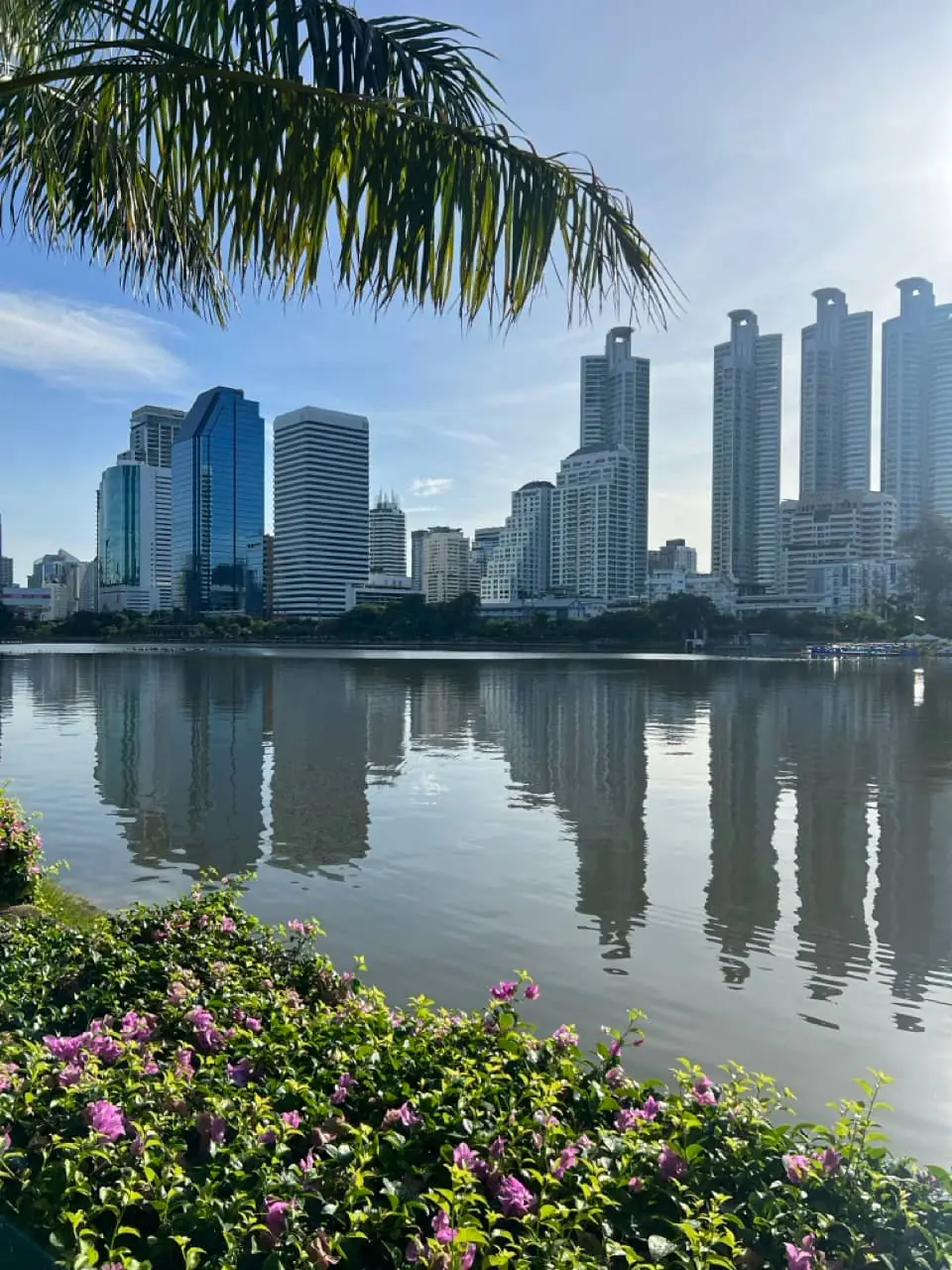
Lumpini is Bangkok’s most famous green space, and the comparison to Central Park gets made so often it has become a cliche. It is also accurate. Right in the heart of the city, ringed by towers and traffic, it gives you a genuinely large lake, wide walking and running paths, and enough shade to make a morning visit comfortable even in the hot months.
Early morning is the time to come. The park fills with locals doing aerobics, tai chi and group exercise before the heat sets in, there are paddleboats on the lake if you want something more active, and the monitor lizards that patrol the water’s edge have become an attraction in their own right. Some of them are the size of a small crocodile and completely unbothered by you. It is a tourist destination, but an honest one: it is popular with locals as much as visitors, so it never feels like a performance.
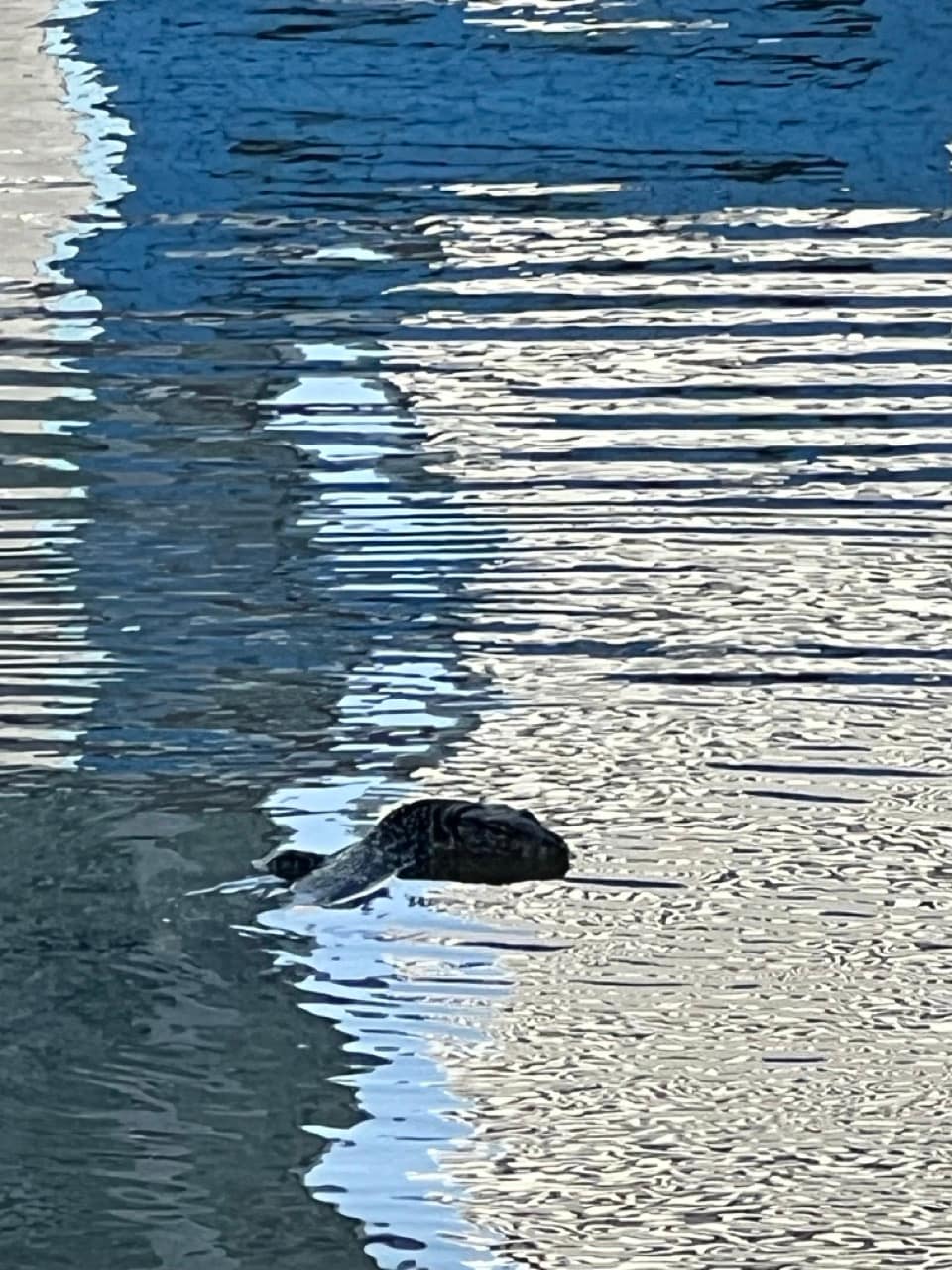
One of Lumpini’s monitor lizards out for a swim. They are practically local celebrities.
Benjakitti Forest Park
Benjakitti sits just east of Lumpini and is joined to it by the Green Mile, a roughly 1.6 kilometre elevated walkway (about a mile, hence the name) that creates a car-free route between the two parks straight through the middle of the city, with a cycle side and a walking side. If you are visiting one, do both in the same trip via the walkway. The elevated views over the neighbourhood are good, and the whole thing was rebuilt and repainted in 2022, so it is in fine shape.
Benjakitti itself wraps around a big lake with a cycling track looping the perimeter, and since the 2022 forest-park expansion it is one of the nicest places in the city to ride. The easiest way to do a lap is on a dockless Anywheel bike, which you unlock with an app for a few baht and leave anywhere; I explain exactly how that works in the getting around Bangkok guide. Inside the park it is free to ride between 6am and 5.30pm, signposted at the gates, so a loop of the lake can cost you nothing at all.
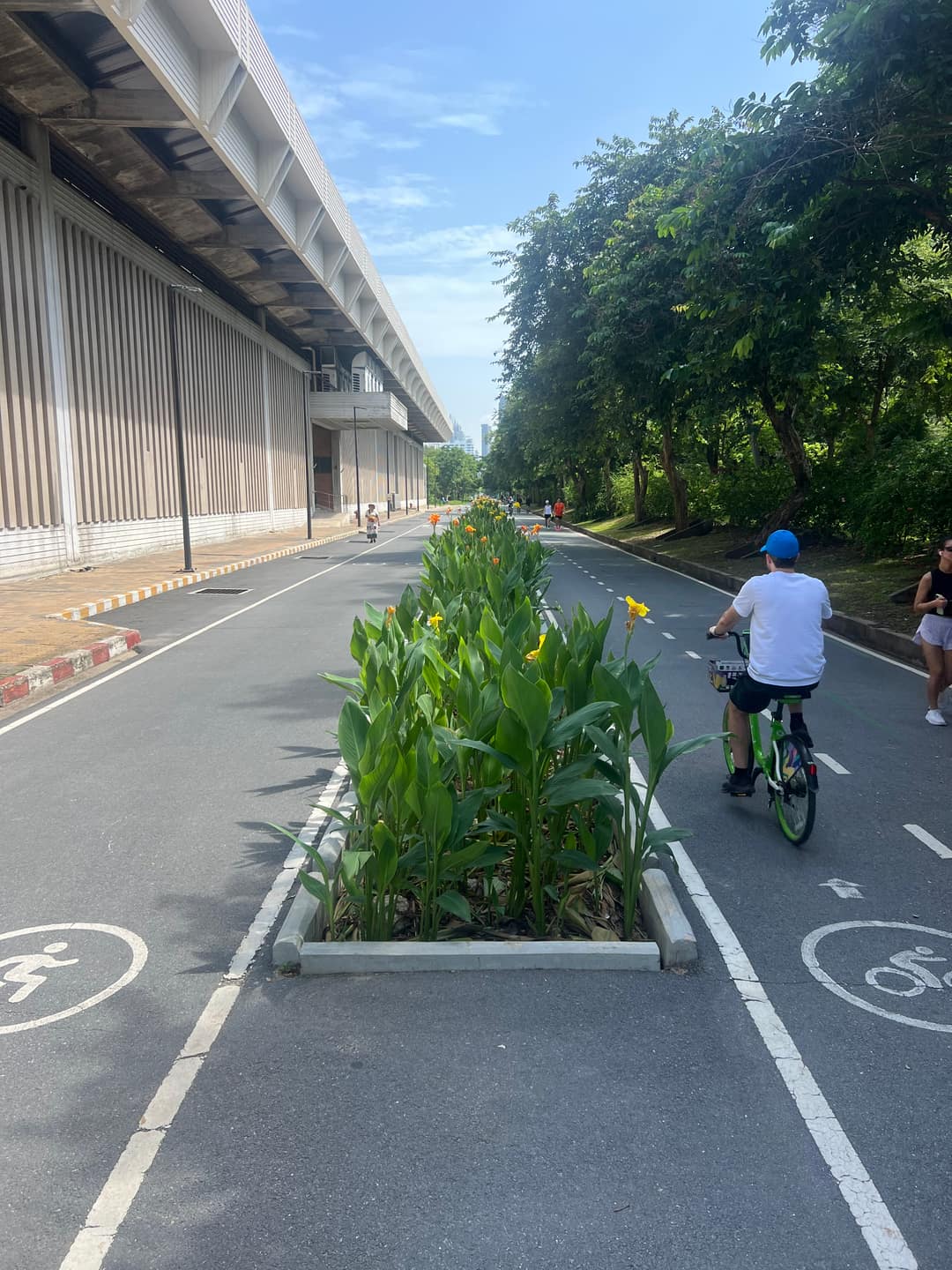
A free loop of Benjakitti on an Anywheel, down the flower-lined cycle lane.
The attached Benjakitti Sports Center has free public badminton courts and other facilities open to anyone who turns up, daily from 5am to 10pm, with free showers and changing rooms too. It is entirely unremarkable to locals, which is exactly why it never makes the travel blogs. If you fancy a game of badminton with a mix of Bangkokians for nothing, this is where you go.
Chulalongkorn University Centenary Park
Chula Centenary Park sits in the heart of the Siam area, a few minutes south of one of the busiest shopping and transit hubs in the city, and somehow stays genuinely calm despite it.
It was designed as a climate-resilient park, built to catch and hold monsoon floodwater, and it shows: the whole site slopes gently down towards a retention pond so it feels more like landscape architecture than a typical city park. It is a favourite with students from the neighbouring university, which gives it a relaxed, unhurried mood distinct from the exercise-focused energy of Lumpini or Benjakitti. It is not a half-day destination, but as a place to decompress between the Siam malls and the MBK end of town, it is one of the loveliest green spaces in central Bangkok.
The hidden ones worth finding
Nong Bon Lake Park
Nong Bon sits out in the eastern suburbs, well off the tourist corridor, and locals quietly treat it as their own. The trek to reach it keeps it that way. It is also, by area, the largest public park in Bangkok, built around a huge reservoir with a flat, well-kept cycling and walking loop and plenty of shade for a picnic.
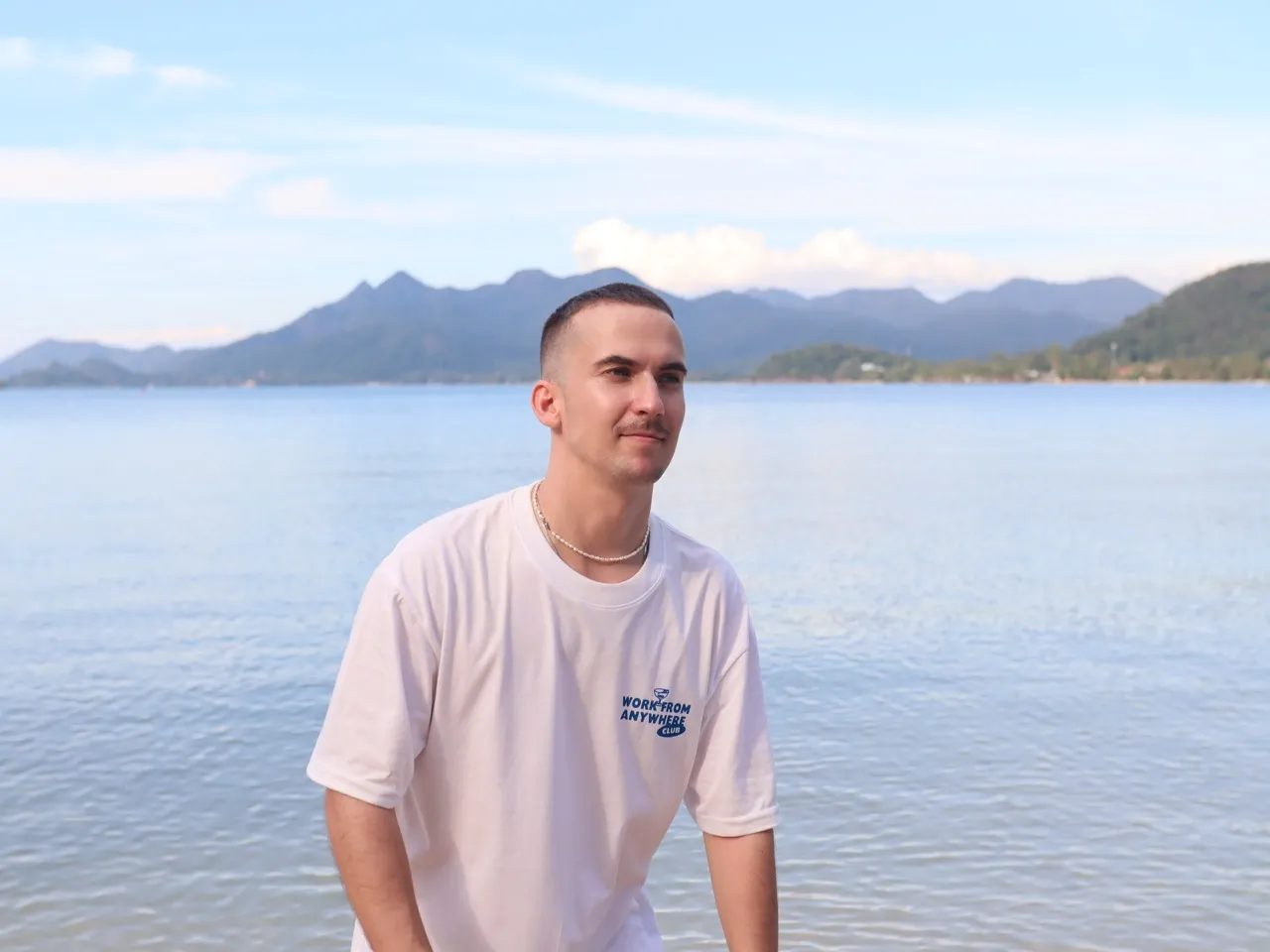
What makes it special is the water sports centre the city runs on the lake. Membership is a token annual fee, around 40 baht for Thai residents and a little more for foreigners, and it covers sailing, windsurfing, kayaking and paddleboarding, gear included, with free instruction sessions most afternoons. You sign up on arrival with your passport and a couple of photos, book a slot through their app, and you are out on the water. I have done it, and gliding a little sailing dinghy across a lake in the eastern reaches of Bangkok is about as far from the Grand Palace crowds as the city gets.
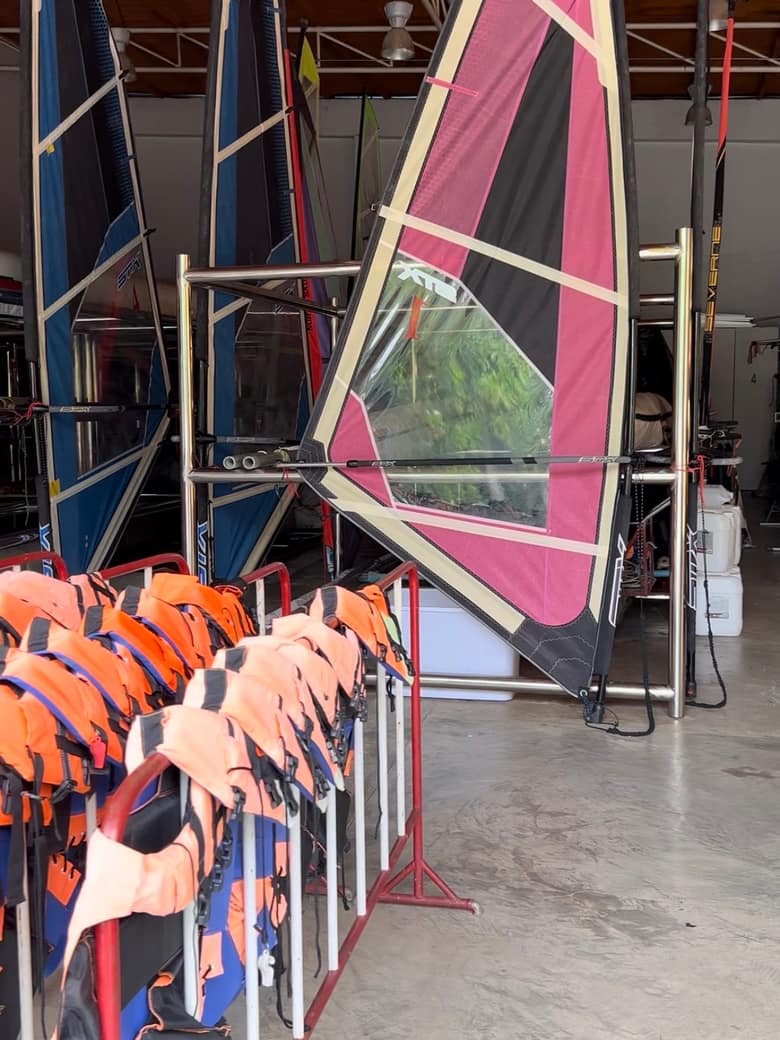
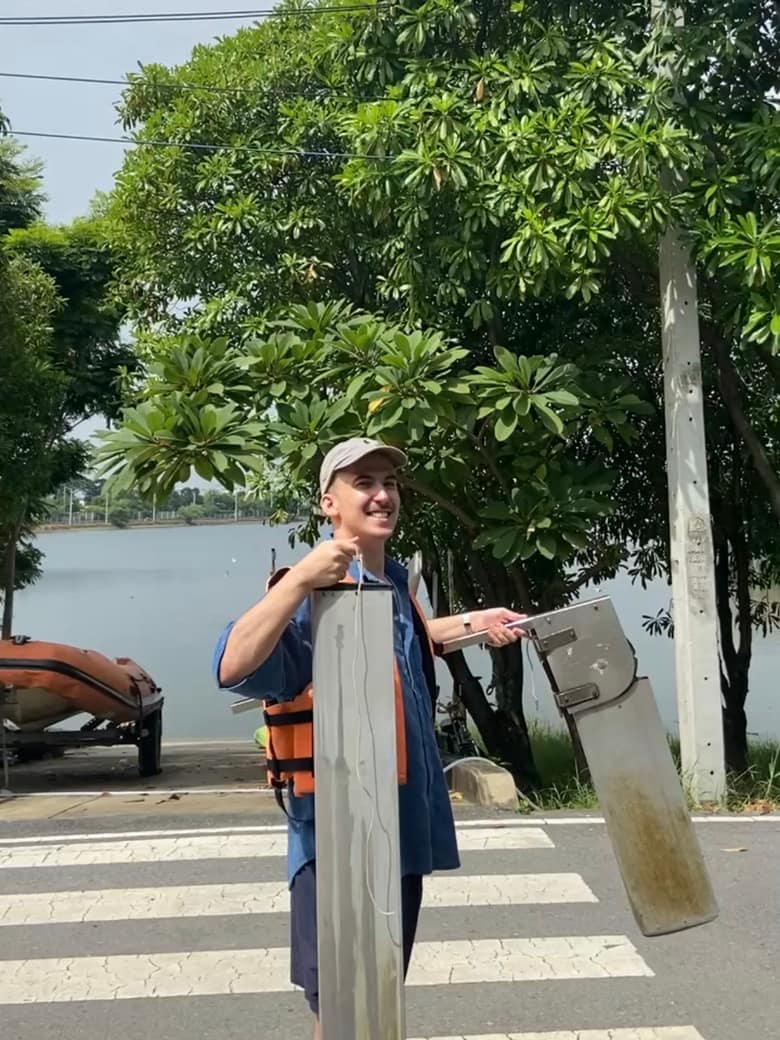

A morning at Nong Bon, where a whole year of water sports costs pocket change, gear included. That is me getting my money’s worth.
Hire a bike when you arrive and do a lap of the lake first. The park is big enough that the full perimeter takes a while, and the paths are flat and easy. Grab is by far the simplest way to get here, and it is worth checking the sailing session times before you commit to the trip.
Rot Fai Park, Chatuchak
Rot Fai Park (Suan Rot Fai, the Railway Park) sits right next to Chatuchak Market in the north of the city, and it is much bigger and more interesting than its famous neighbour would suggest, though the weekend-market crowds barely notice it.
It has a large lake, sweeping open space, and the relaxed feel of the residential neighbourhood around it. It is popular with joggers, families, and the kind of weekend football games that take over half the grass. If Chatuchak has flattened you, and it will, this is the place to recover for half an hour under the trees before diving back in. It pairs naturally with a market day, which I fold into the longer Bangkok trips in how many days you need in Bangkok.
Bang Krachao: Bangkok’s Green Lung
Bang Krachao is not a park in the usual sense. It is a huge, almost undeveloped green peninsula in a bend of the Chao Phraya, nicknamed the Green Lung of Bangkok, and it is the single best antidote to the city I know. Getting there means a short cross-river ferry (the Khlong Toei pier crossing is the handiest), and that little water gap is what keeps the tourist numbers low and the whole place peaceful.
Once across, hire a bike and lose yourself in the network of narrow raised paths that thread through jungle, orchards, canal-side villages and temples. Sri Nakhon Khuean Khan Park sits at its heart and is worth a look, but the real joy is the riding itself: dense green, river glimpses and almost no traffic, as close to the countryside as you will get without leaving the city. Go on a weekend morning when the little market near the ferry is running, and head back before the afternoon heat peaks. The backroads can get confusing on a first visit, so a guided Bang Krachao cycling tour is worth considering if you would rather not navigate.
A few practical notes for park visiting in Bangkok
Timing. Early morning is almost always the answer. Most parks are at their best between 6am and 9am, when locals are out exercising and the temperature is manageable. By midday in the hot months, open green space becomes genuinely uncomfortable.
Getting there. Lumpini, Benjakitti, Chula Centenary and Rot Fai are all a short walk from the BTS or MRT. Nong Bon and Bang Krachao are best reached by Grab or ferry. The getting around Bangkok guide has the detail on all of it.
What to bring. Water, sunscreen and comfortable shoes. Most parks have food and drink vendors near the entrances, so you do not need to plan snacks ahead.
Best parks in Bangkok FAQ
What is the best park in Bangkok?
Lumpini Park is the best all-rounder: central, large and easy to reach, with a lake, running paths and its famous monitor lizards. For cycling, Benjakitti Forest Park is the pick, and for something completely off the tourist trail, the eastern lake at Nong Bon.
Which Bangkok park is best for cycling?
Benjakitti Forest Park has a dedicated loop and dockless bikes for hire, and connects to Lumpini via the Green Mile. For a longer, wilder ride, cross the river to Bang Krachao, the Green Lung, and follow its raised jungle paths.
Are Bangkok’s parks free?
Yes. All the major parks, including Lumpini, Benjakitti and Chula Centenary, are free to enter. Even the Benjakitti Sports Center’s badminton courts are free, and a year’s membership at the Nong Bon water sports centre is only a token annual fee.
What is the Green Mile in Bangkok?
The Green Mile is a roughly 1.6 kilometre elevated walkway and cycle path linking Lumpini Park and Benjakitti Forest Park, letting you move between the two on a car-free route through the middle of the city.
Can you see monitor lizards in Lumpini Park?
Yes. Lumpini is well known for its large monitor lizards, which swim in the lake and bask along the paths, especially in the mornings. They are harmless if left alone, and among the park’s biggest draws.
Where do locals go for green space in Bangkok?
Beyond Lumpini and Benjakitti, locals head to lesser-known spots like Nong Bon Lake in the east, Rot Fai Park by Chatuchak, and Bang Krachao across the river, all of which stay refreshingly free of tourists.