A Quick Guide to Hong Kong
This post contains affiliate links. If you book accommodation, tours, or buy products through these links, I may earn a small commission at no extra cost to you. This helps support the site and keeps the content free.
Hong Kong is one of those cities that hits all your senses at once. The name is the phonetic translation of its Cantonese name, Heung gawng, meaning fragrant harbour, and there is still a smell on every street: steam off the noodle pans, incense drifting out of the temples, dried seafood, fresh fruit, exhaust. It is one of the most densely populated places on earth, and then you turn a corner, hop on a train and twenty minutes later you are walking through proper country parkland with nobody around.
That mix is exactly why it makes such a good short trip. You can pack a lot into a few days here without ever feeling rushed, because getting around is so easy. This is my quick guide to making the most of it.
If Hong Kong is one stop on a wider Asia trip, browse our other travel guides for where to head next, and check the British visa requirements for Southeast Asia before you cross any borders.
How many days do you need?
Three to four days is the sweet spot. That is enough to do the big sights (the skyline, the markets, a hike, plenty of eating) without trying to cram everything in. If you only have a long weekend, you can still see a lot, just pick one hike rather than three and accept you will want to come back.
Getting to Hong Kong
You will almost certainly arrive at Hong Kong International Airport, out on the island of Chek Lap Kok. It is a long way from the city but extremely well connected, so don’t worry about the distance.
The quickest way into town is the Airport Express train, which gets you to Kowloon or Hong Kong Island in around 25 minutes. As a rough guide it costs about HKD 105 to 120 if you tap in with an Octopus card (see below), which is slightly cheaper than buying a single ticket. If you are watching the budget, the airport buses are much cheaper, cover most of the city and run late into the night.
Getting around: the Octopus card and the MTR
The single best thing you can do on arrival is pick up an Octopus card. It is a tap-and-go smart card that works on the MTR (the metro), the Airport Express, buses, trams, the Star Ferry and loads of other ferries, and you can even use it to pay in convenience stores, supermarkets and fast food places.
A standard adult card costs HKD 150, which is HKD 50 as a refundable deposit plus HKD 100 of credit to get you started. You just tap on the way in and out, the reader beeps and shows your remaining balance, and you top it up at any MTR station or corner shop when it runs low.
The MTR itself is fast, clean and dirt cheap, and it links up the islands so you can get from the heart of the city to a quiet beach or the start of a hike in no time. Hong Kong is one of the least car-dependent cities I have been to. Taxis are everywhere too if you need one, they are just pricier than the train.
Money and costs
Most shops, restaurants and businesses deal in Hong Kong Dollars (HKD). There are ATMs everywhere and cards are widely accepted, but it is worth carrying some cash for street food stalls and smaller guesthouses.
Hong Kong is not a cheap city, so go in with that expectation. A budget traveller can get by on roughly HKD 600 a day once you are here, more if you are eating in nicer places or drinking out. The good news is that street food and local cafes are brilliant value, and a huge number of the best things to do (the views, the markets, the hikes) are completely free.
Where to stay in Hong Kong
A quick but important heads-up: short-term Airbnb-style lettings are effectively illegal in Hong Kong. Anywhere renting a room for under 28 days needs a hotel or guesthouse licence, and unlicensed places can be shut down (operators face fines and even jail), which is not the situation you want to find yourself in mid-trip. So skip Airbnb here and book a properly licensed guesthouse, hostel or hotel instead.
The other thing to know is that rooms are small and prices are high for what you get. That is just Hong Kong, so manage your expectations and you will be fine.
Budget: hostels and guesthouses
For cheap beds, the Kowloon side around Mong Kok and Yau Ma Tei is your friend, and it puts you right next to the markets and the food. Chungking Mansions on Nathan Road in Tsim Sha Tsui is the famous backpacker option, a single building stuffed with over a hundred small guesthouses where private rooms start at roughly HKD 200 to 400 a night. The rooms are tiny and it is a bit of a maze, but plenty are properly licensed and it is about as cheap as the city gets. Hostels in the same area do dorm beds for around HKD 200 to 300.
Mid-range and treating yourself
If you want a bit more comfort, there are decent hotels across Kowloon and the island. I have a soft spot for the western district of Sai Ying Pun, where the streets are full of little cafes, bars and workspaces with good views of the bay. Tsim Sha Tsui tends to have better-value hotels than the island, but personally I prefer staying on the Hong Kong Island side.
Things to do in Hong Kong
Eating
Hong Kong is a foodie paradise. There are thousands of restaurants serving food from all over the world, plus street vendors on every corner, so you genuinely cannot eat badly here.
Top of my list is dim sum at Tim Ho Wan. The original branch in Sham Shui Po won a Michelin star back in 2010 and built a global reputation as the cheapest Michelin-recognised dim sum you could find. It still features in the Michelin Guide today, the baked BBQ pork buns are the thing to order, and a proper feed will barely dent your wallet. Get there early, because the queues are real.
The markets and shopping
The markets are half the fun of Hong Kong, and they are where the city feels most alive. The usual suspects are Causeway Bay, Soho, the Temple Street Night Market, the Ladies’ Market on Tung Choi Street and Sneaker Street on Fa Yuen Street. Each has its own feel and a mix of big brands, limited editions and one-off bespoke bits.
Causeway Bay alone could eat up most of a day. My tip is to wander a bit further than the obvious tourist strips, because the locals tend to avoid them and shop for half the price. If you keep going down Temple Street the market carries on past the park, and the side streets running east are full of tempting food vendors and dessert spots.
The skyline and the views
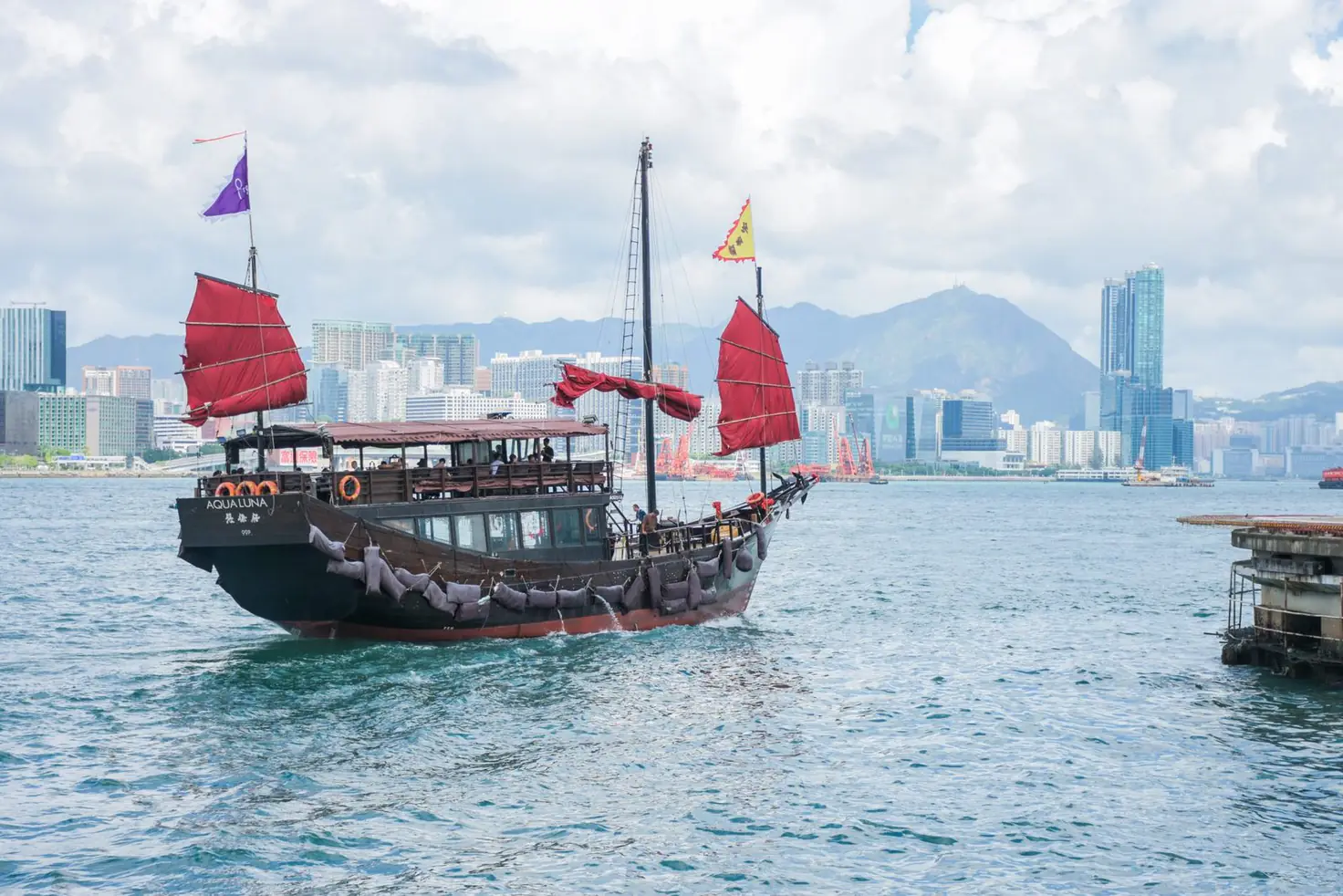
You can’t come to Hong Kong and not look at that skyline. Head to the Kowloon waterfront in Tsim Sha Tsui for the classic view back across Victoria Harbour, all skyscrapers and neon, especially good after dark. Mong Kok, at the northern end of Kowloon, is the more chaotic, authentic side: street markets, goldfish swimming in little bags hung up on the walls, meat out in the open.
For the postcard shots there is the 34m Tian Tan Buddha sitting above Lantau Island, but honestly some of my favourite photos here were grabbed on random back streets rather than at the big sights, so keep your camera out as you walk.
Hiking
When the crowds and noise get too much, the hills are right there, and the country parks are one of the things that makes Hong Kong special.
Braemar Hill, on the east of Hong Kong Island, isn’t too steep and rewards you with big views over the east and north of the island. It is named after a Scottish village, and part of it sits in Tai Tam Country Park, surrounded by mansions, gardens and well-to-do neighbourhoods.
For something tougher, Lion Rock rises to around 1,600 feet. You need to be reasonably fit, there are some steep sections, and it takes a few hours to reach the peak, but the views over the whole city are worth it.
I didn’t hike as much as I had hoped on my trip because the rain had other ideas, but I will definitely be back to finally conquer Lion Rock.
If you love a dense, food-obsessed Asian city break, you will probably enjoy our secrets of Seoul guide too.