Things to Do in Kaohsiung: Why Taiwan's Southern City Deserves Your Time
This post contains affiliate links. If you book accommodation, tours, or buy products through these links, I may earn a small commission at no extra cost to you. This helps support the site and keeps the content free.
Most Taiwan itineraries never make it past Taipei, which is exactly why you should get on the high speed rail and head south. Kaohsiung is Taiwan’s big port city: warmer, cheaper and far less crowded than the capital, with a harbourfront arts district, dragon-guarded temples, and some of the friendliest street food culture on the island. I spent a stretch of one summer down here, long enough to sit out a super typhoon, and came away rating it well above its reputation.
Here is how to do it properly. For where the city fits in a bigger trip, see how many days you need in Taiwan and the wider Taiwan travel guide.
The vibe
Kaohsiung is a working harbour that reinvented itself. Old warehouses became art spaces, the waterfront got a light rail loop, and the whole place runs at a pace Taipei forgot years ago. It is Taiwan with the volume turned down and the temperature turned up, and locals here have time for you in a way big capitals rarely do.
Years ago I shot a scrappy thirty-second clip of the city, no commentary, just the feel of the place. If you want a quick sense of the vibe before you read on, watch it on YouTube.
Getting there
The Taiwan High Speed Rail from Taipei to Zuoying takes around 90 minutes to two hours, and Zuoying station sits right next to Lotus Pond, so you can start sightseeing before you have even found your hotel. Book ahead for the cheaper fares: you can reserve high speed rail tickets online before you travel. Kaohsiung also has its own international airport, with flights from across Asia and a station right on the MRT Red Line about ten minutes from downtown, so if you are hopping around the region you can fly straight in and skip Taipei altogether. Within the city, the MRT (two lines plus a waterfront light rail) covers everything, and an EasyCard makes it all tap and go.
Where to stay
Base yourself near Formosa Boulevard or Central Park MRT stations for the best mix of food, nightlife and connections. You can browse Kaohsiung hotels on Trip.com to compare areas and prices.
Things to do
Lotus Pond and the Dragon and Tiger Pagodas
The famous twin pagodas at Lotus Pond are back in full glory. After years behind scaffolding, the Dragon and Tiger Pagodas fully reopened in 2025, and you can climb inside them again. Enter through the dragon’s mouth, exit through the tiger’s, and turn bad luck into good fortune on the way out. The whole lake had a major refresh recently, with a new path all the way around, and it is ringed with temples: the Spring and Autumn Pavilions, the towering Xuanwu statue, and the Confucius Temple at the northern end. Go early or at sunset and give it two hours. I have a full guide to Lotus Pond with everything to see around the water.
Sanfeng Temple
Sanfeng Temple is a 300-year-old Taoist temple whose courtyard is strung with around a thousand red lanterns, a glowing canopy that has quietly made it one of the most photographed spots in the city. It is free, open from early morning until roughly 10pm, and a fifteen-minute walk from Formosa Boulevard MRT, so it drops easily into a downtown afternoon. Come late in the day, when the lanterns light up.
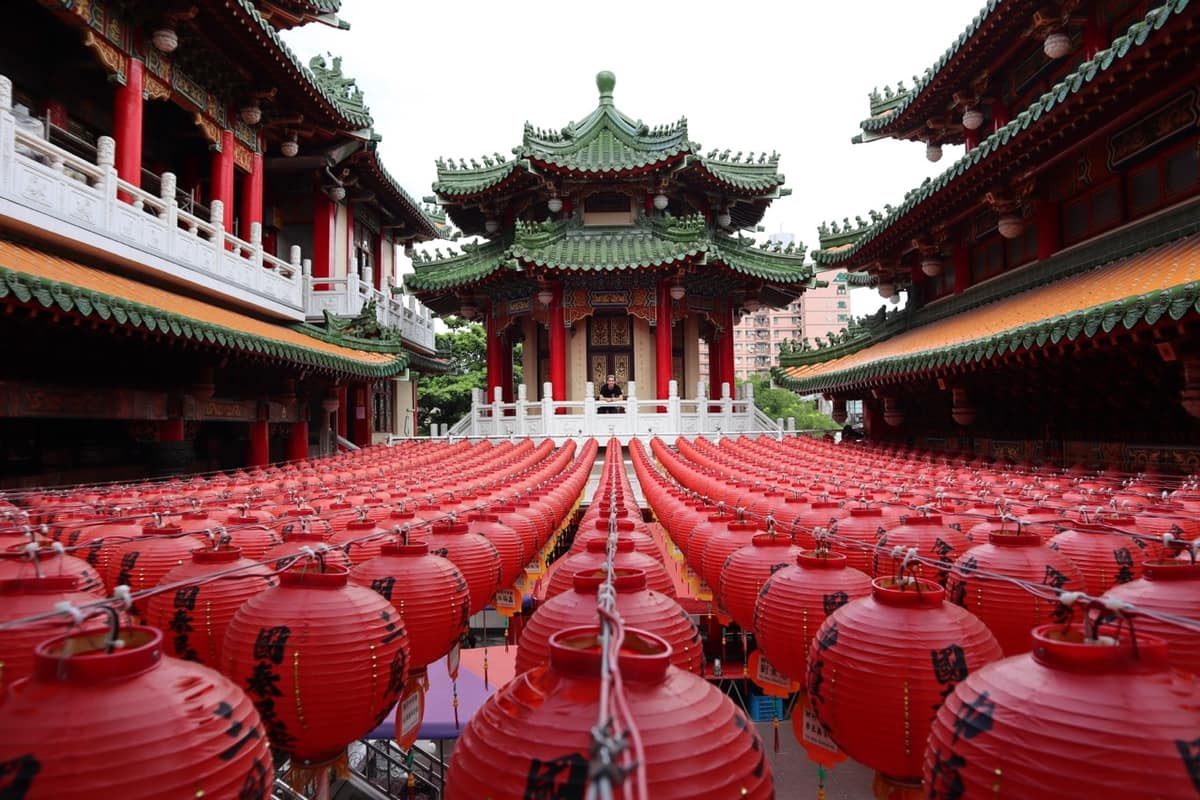
Sanfeng Temple’s canopy of a thousand red lanterns, best after the lights come on.
Pier-2 Art Center
A long stretch of old harbour warehouses reborn as Kaohsiung’s creative playground: big public art, indie shops, galleries, and the waterfront light rail running right through it. The container sculptures scattered around nod to the port that built the city. Come late afternoon and stay for golden hour over the water.
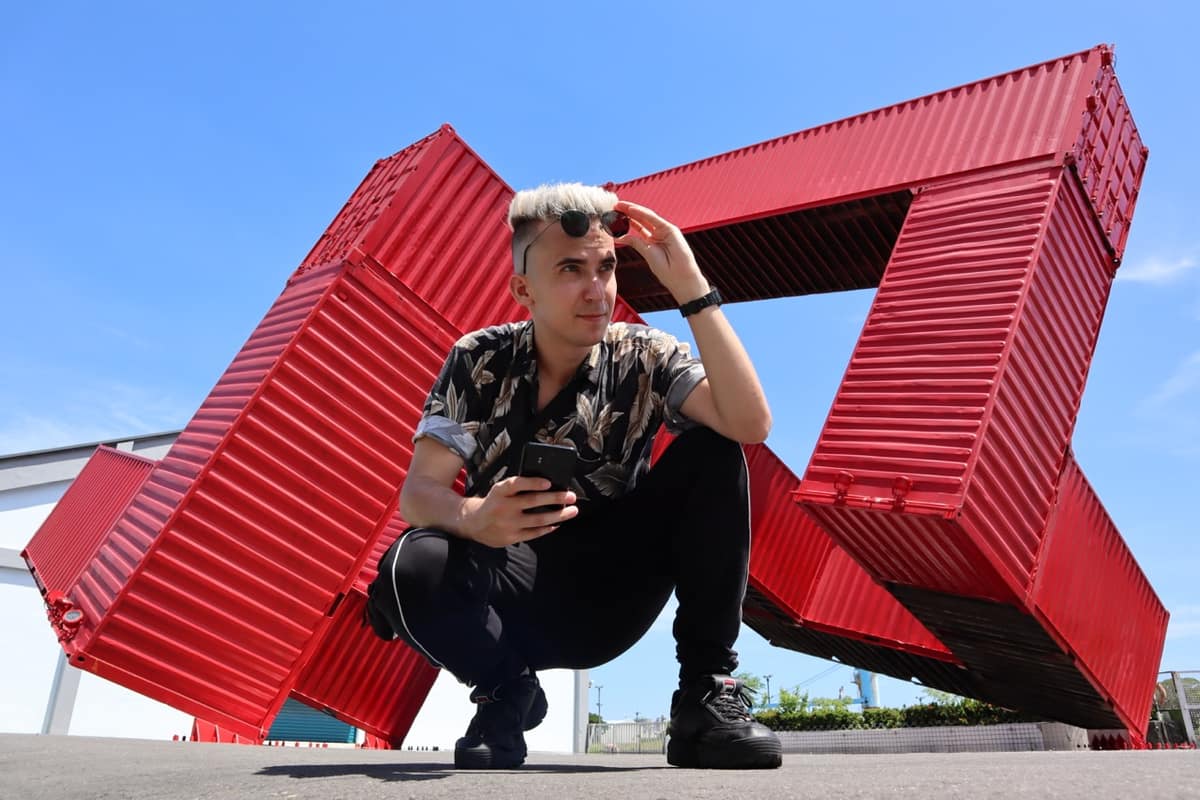
Container art around Pier-2, a fitting monument in a city the shipping trade built.
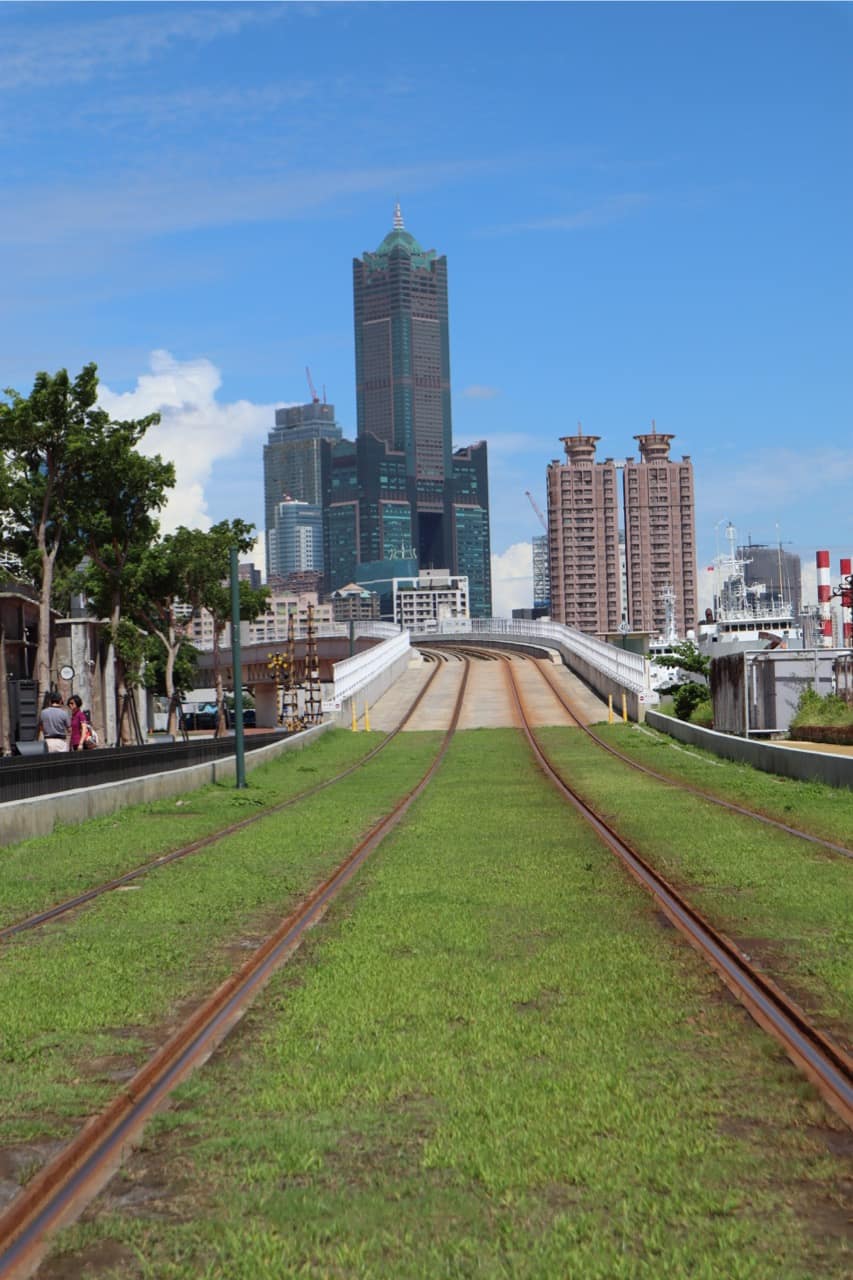
The old harbour railway lines beside Pier-2, with the 85 Sky Tower closing off the view.
The Dome of Light
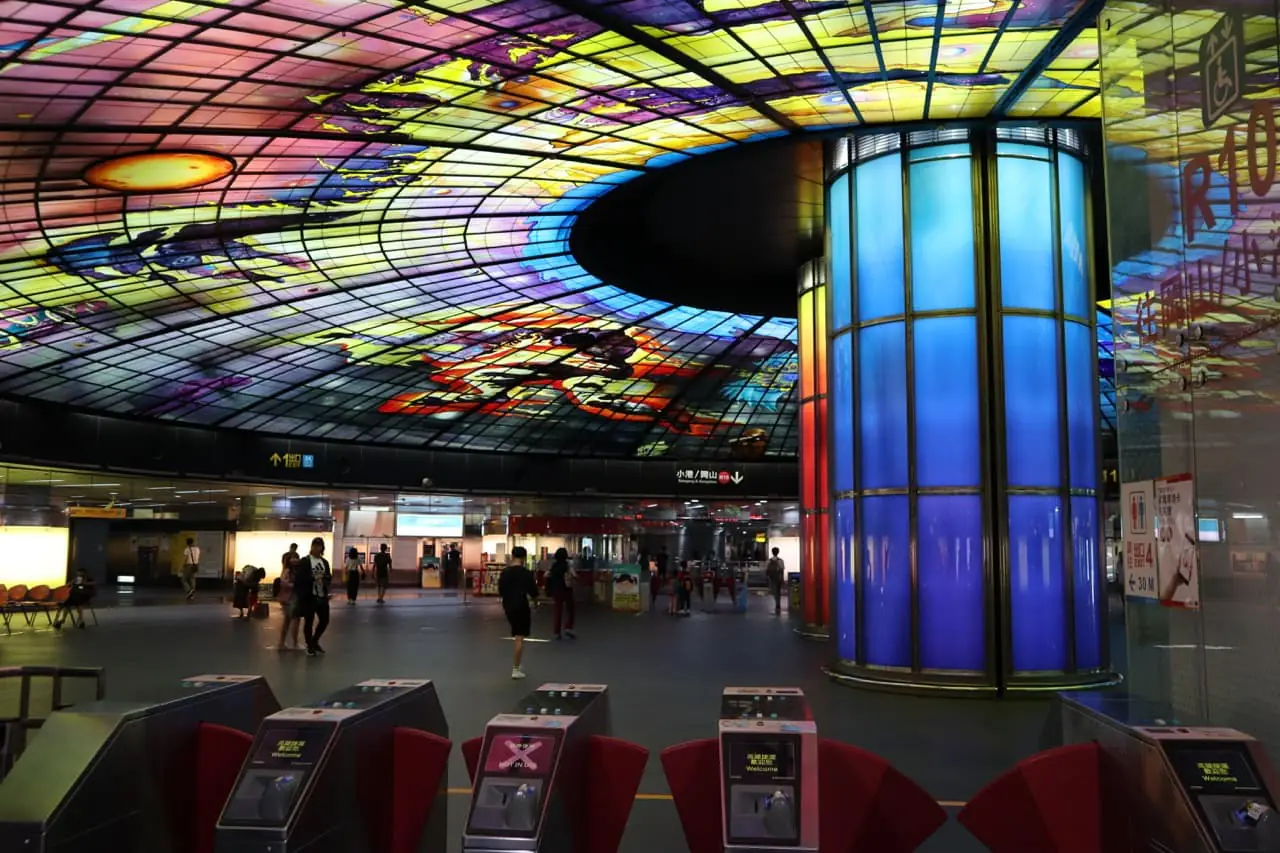
Inside Formosa Boulevard MRT station sits one of the largest works of glass art in the world: a roughly 30-metre kaleidoscope ceiling of thousands of stained-glass panels that turns a metro interchange into something closer to a cathedral. It is free, takes five minutes, and is worth timing a journey around. It is the photo at the top of this guide, and it is even better in person.
Kaohsiung Martyrs’ Shrine
For the best free view in the city, head up to the Martyrs’ Shrine on the slopes of Shoushan. A grand ceremonial gateway and hall in northern-palace style frame a sweeping panorama over the harbour, the container terminals and the 85 Sky Tower, and hardly anyone else makes the climb. Best at sunset.
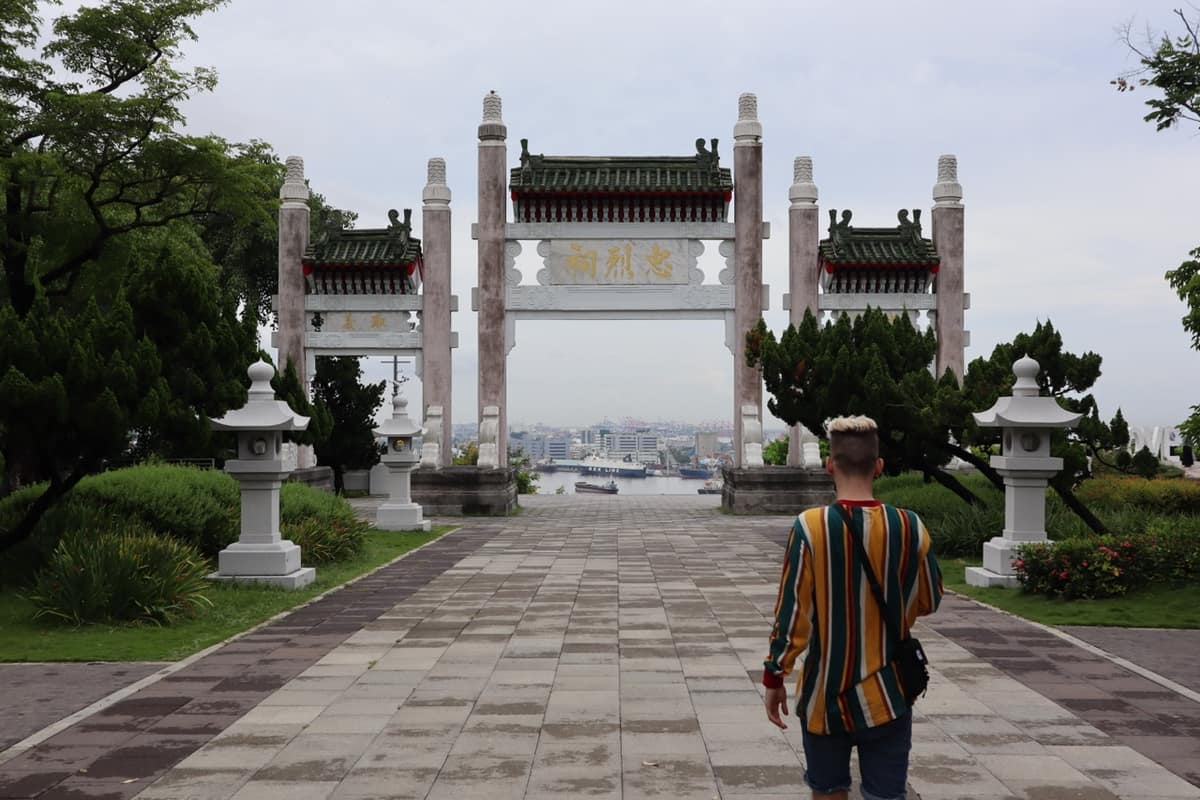
The Martyrs’ Shrine gateway, with the working harbour laid out beyond it.
Cijin Island
A five-minute ferry from the harbour delivers you to Cijin: a black sand beach, a lighthouse, a seafood street, and rental bikes to loop it all. This is where Kaohsiung families spend their Sundays, and it shows. The crossing itself, threading between the container ships, is half the fun.
Fo Guang Shan
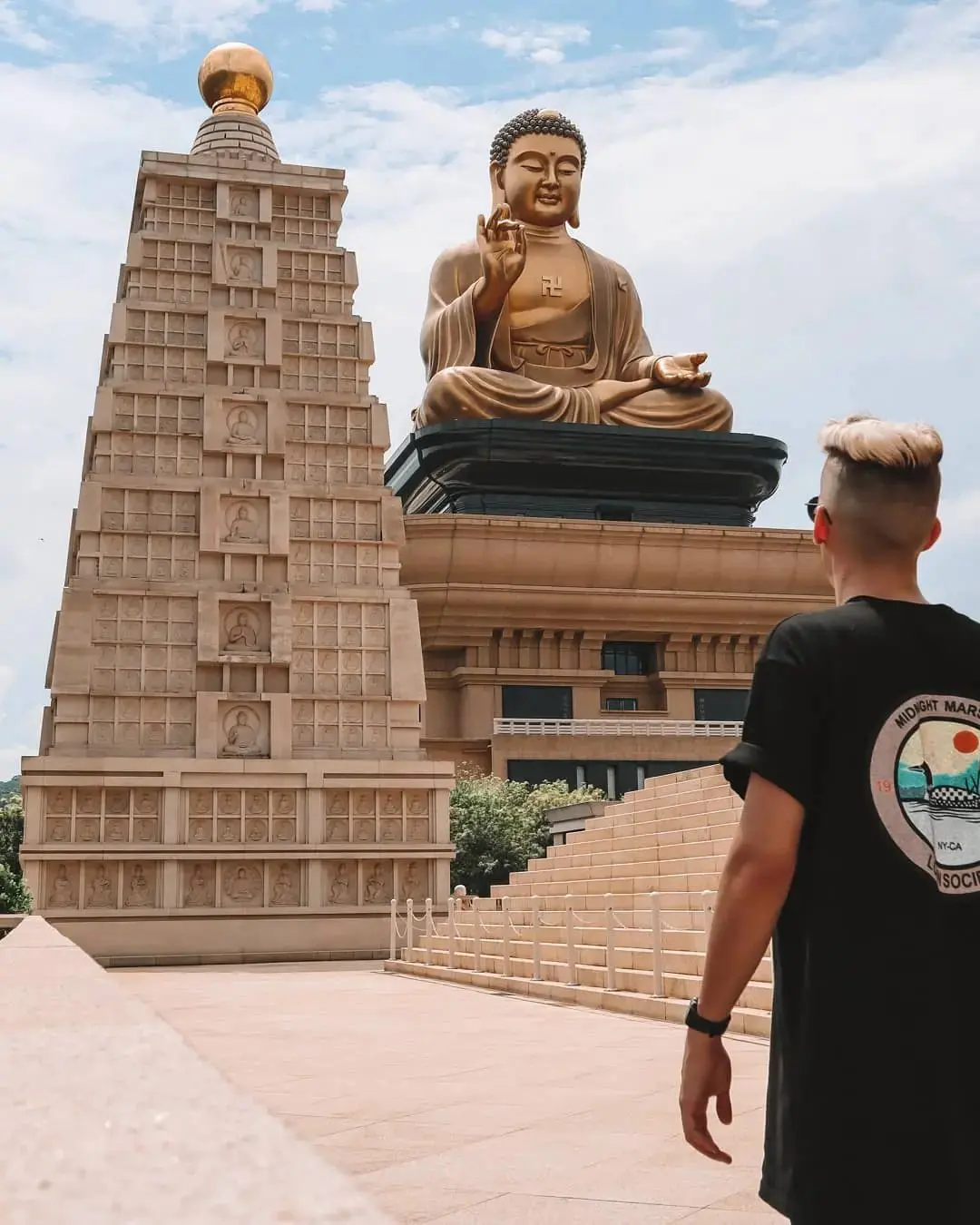
Taiwan’s largest Buddhist monastery, crowned by an enormous seated bronze Buddha, sits under an hour from the city and makes one of the most extraordinary half-days in southern Taiwan. It is big enough to deserve its own post: here is my full Fo Guang Shan guide.
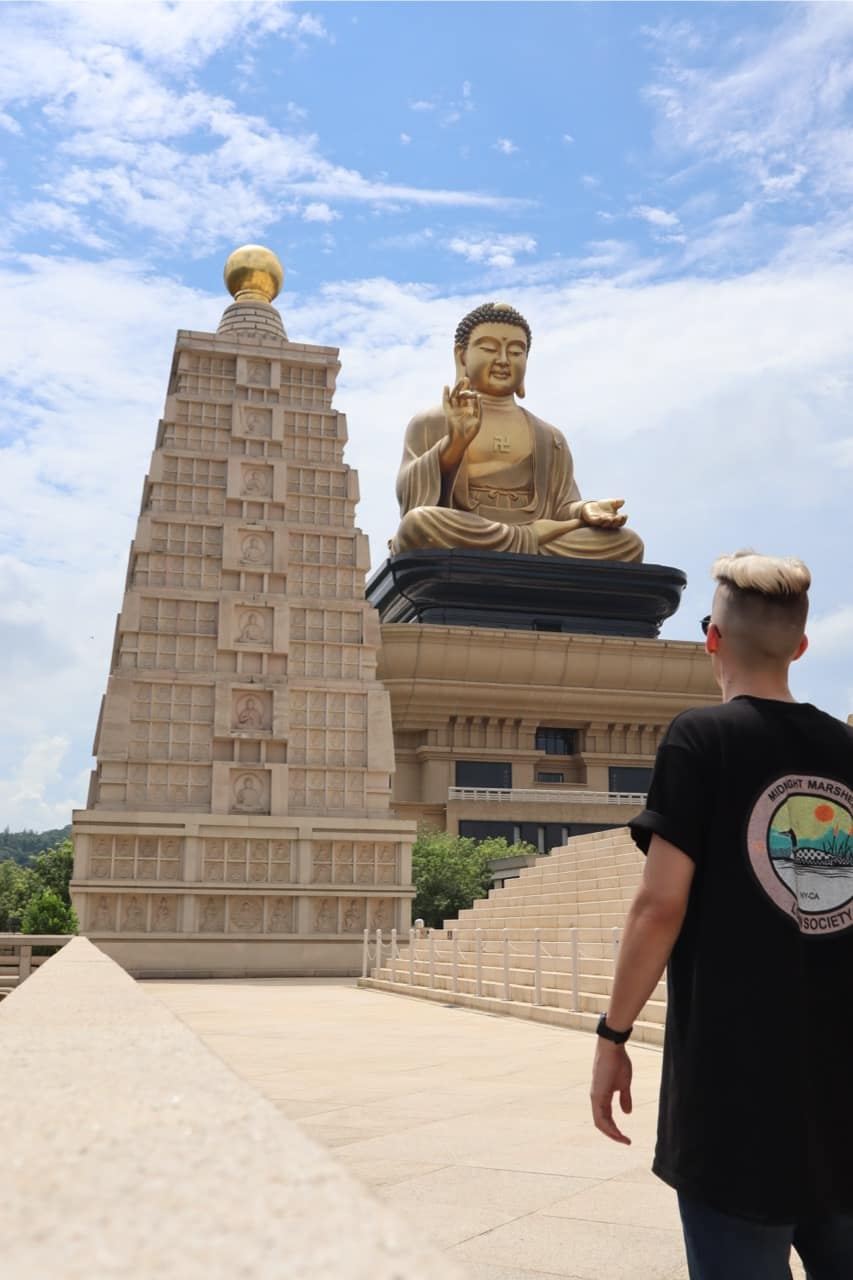
The Big Buddha at Fo Guang Shan, under an hour from central Kaohsiung.
Where to eat and drink
Ruifeng Night Market. Kaohsiung’s best-loved night market delivers the full Taiwanese experience with a mostly local crowd: grilled everything, papaya milk, and queues that tell you exactly what to order. It is closed on Mondays and Wednesdays, so plan around it, and the weekend is when it is liveliest.
Zuoying’s old streets. The neighbourhood around Lotus Pond hides traditional markets and old-street eats. Come hungry.
The harbourfront. Between Pier-2 and the Great Harbor Bridge, waterfront cafes and bars have multiplied. A sunset beer overlooking the cranes and container ships is a very Kaohsiung kind of pleasure.
Is Kaohsiung right for you?
Yes, if: you want Taiwan beyond the capital, you like your cities warm and unhurried, temples and harbours appeal more than malls, or Taipei’s drizzle has worn you down. The south is reliably sunnier.
Maybe not, if: you have three days in Taiwan and have not seen Taipei yet, or you need big-city polish everywhere you go. Kaohsiung is proudly a little rough at the edges, and better for it.
Kaohsiung FAQ
Is Kaohsiung worth visiting?
Yes. Kaohsiung offers the Dragon and Tiger Pagodas, the Pier-2 arts district, Cijin Island and Fo Guang Shan, all with warmer weather, lower prices and fewer crowds than Taipei.
How many days do you need in Kaohsiung?
Two full days covers the highlights comfortably: one for Lotus Pond and the city centre, one for Fo Guang Shan or Cijin Island. Three days lets you slow right down.
How do you get from Taipei to Kaohsiung?
The high speed rail from Taipei to Zuoying takes roughly 90 minutes to two hours. Zuoying station is next to Lotus Pond and connects straight to the city MRT.
Are the Dragon and Tiger Pagodas open?
Yes. After a lengthy renovation the pagodas fully reopened in 2025, and visitors can once again walk through the dragon and tiger entrances and climb the towers. Entry is free.
What is the Dome of Light in Kaohsiung?
The Dome of Light is a huge circular stained-glass artwork in the ceiling of Formosa Boulevard MRT station, one of the largest glass artworks in the world. It is free to see and a two-minute walk from the platforms.